

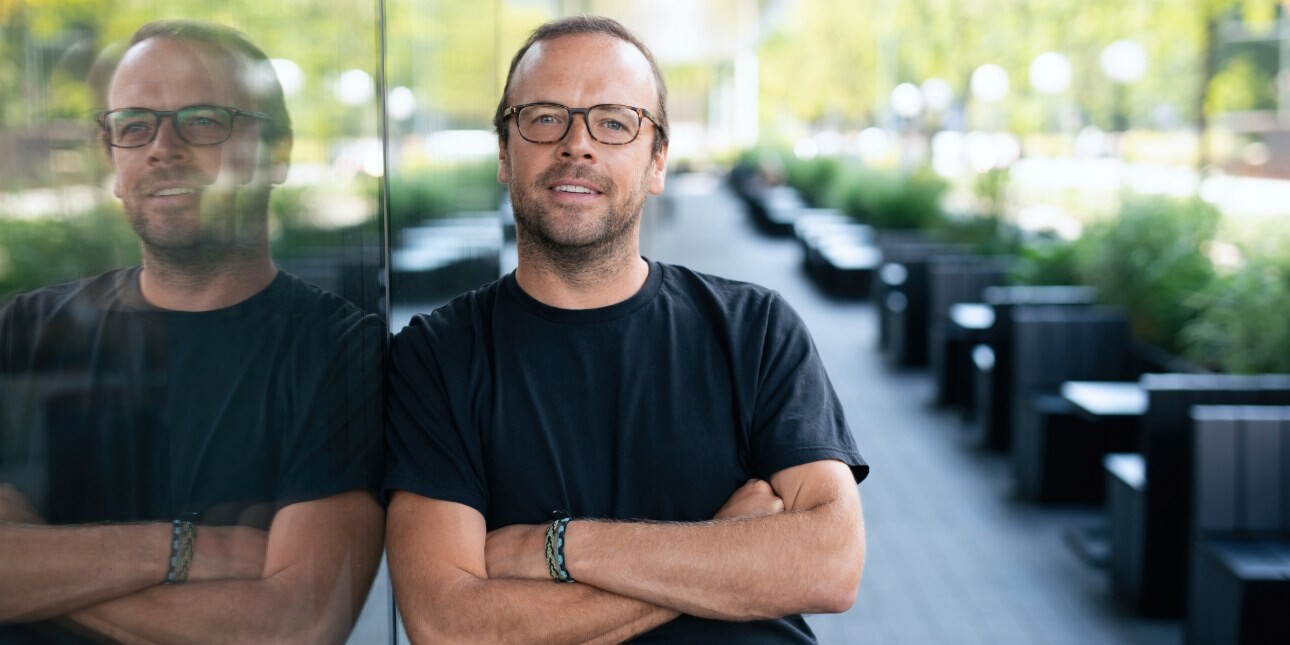
Brand leader James Peach: You can be cutthroat, visionary and empathetic too
The keynote speaker at the CIPR’s annual conference and a veteran of Uber, Innocent and Vinted, Peach explains wackaging, leadership skills and why everyone needs a ‘f***-up card’…
James Peach is a brand leader and adventurer. Having graduated from the University of Edinburgh, he started working for the Royal Bank of Scotland just three months after the 2008 financial meltdown and its government bailout. He then worked at Innocent drinks for seven years, rising to the role of UK senior brand manager. In 2018, Peach joined Uber as their UK head of brand and campaigns, staying three years. Clothing app Vinted hired him as senior director of global brand during the pandemic, where he oversaw the Lithuanian unicorn’s enormous growth during the second-hand clothing boom of the early-2020s.
Today, Peach is not only a marketing leader working for brands in fast-moving consumer goods (FMCG) and tech, but also a keynote speaker (he’ll be on the main stage at the CIPR annual conference on Thursday 13 November) and an ambassador for suicide prevention charity Campaign Against Living Miserably (Calm). He’s also an adventurer who once cycled 25,400 miles around the world and is a fellow of the Royal Geographical Society.
My career started in video production at London startups. However, there was a depressing trend: every startup became an instant success the moment I left. Eventually, I ran out of money and needed to look for a proper job…
Innocent were true marketing pioneers – their (what's now called) wackaging was genius. They thought hard about how they spoke with their customers and were trailblazers in ‘wackaging’ [the trend for packaging to have a chatty tone of voice: think ‘Keep me in the fridge!’ emblazoned on the side of juice bottles]. It wasn’t just marketing: they embedded their values across the company, giving 10% of profits to charity or having beanbags in the office.
However Innocent wasn’t good at failing. The company was full of people who’d never failed in their lives – they were highly-educated graduates who had sailed through exams and always got the promotion or pay rise. This inability to fail meant Innocent’s marketing team struggled to take risks.
Today, the biggest danger for business is not taking risks. The world is moving at such a fast pace, businesses and individuals will be paralysed if they’re not willing to take risks.
Everybody should get a ‘f***-up card’. An Austrian senior marketeer at Innocent eventually introduced a ‘f***-up card’ where once every three months, employees had a licence to screw up.
The best marketing ideas don’t always come from the marketing department. At Innocent, we were curious why Tesco stores weren’t putting our drinks on their chilled shelves. It emerged that staff weren’t picking up Innocent bottles because they were cold. So, our operations team and salespeople had the idea to send Innocent-branded woolly gloves to stores. Waitrose and Morrisons quickly followed. Not only did we start seeing more Innocent bottles placed on shelves, but also thousands of people wearing Innocent-branded gloves.
‘Stickiness’ can eliminate the need for traditional marketing. Both Uber and Vinted were pioneering products and ‘sticky’ apps. For example, if Vinted turned off marketing tomorrow, the brand would still grow considerably year-on-year.
I once completed the UK’s first full-country triathlon. It involved cycling the length of the UK, kayaking the width of the country and climbing its height – all in one go.
Spending two months without speaking to anybody impacted my mental health. I was walking solo across central Asia, didn’t know the language and couldn’t communicate with home due to the lack of wifi. Very quickly, my brain started to fold in on itself. Negative thoughts piled on top of one another, and I started creating a world that didn’t exist. After two months, I hated myself.
When I FaceTimed my mum from Azerbaijan, I found it difficult. Her face popped up on the screen from her cottage and I couldn’t deal with the reality of being brought back down to earth, having invented this mean world in my head.
EI is as important as AI. Emotional intelligence is crucial for leadership. I was in a meeting yesterday but slept terribly the night before. I noticed my instinctive words were much more negative than normal, plus I was interrupting people when speaking. When somebody else exhibits those behaviours, do I apply that level of empathy and think ‘maybe they didn’t sleep last night’? Maybe not.
Empathy isn’t about being soft. There is a world where leaders have high EI and empathy but also are visionary and cutthroat at the same time.
UK businesses need to develop a more ‘direct’ communications style. A lot of us spend too much time sending long emails, but when you look at Silicon Valley or some of the exciting businesses coming out of central and eastern Europe, these are very direct people with candid communications styles but just get stuff done. Read Kim Scott’s Radical Candour for more…
Leadership isn’t about management anymore. Today, a leader is a grounded individual who has the skills to do the job, but also high levels of empathy and understanding of human beings… Thomas Plantenga, CEO of Vinted, is an incredible example of this. In the UK, where we have mostly service industries, we need to remember our businesses are just people. And we need leaders who are highly skilled in operating human beings, not machinery.
- James Peach spoke at the CIPR’s annual conference in London on Thursday 13 November. Find out more about James Peach.

Lysanne Currie is the editor of Influence. She previously edited Director magazine for the Institute of Directors and Sky magazine for British Sky Broadcasting. Lysanne is the founder and CEO of content agency Meet the Leader.
Further reading
As the John Lewis Christmas ad lands, how to create a multi-generational PR campaign
The award-winning PR campaign helping GPs better serve veterans
.png&w=728&h=90&maxW=&maxH=&zc=1)
