
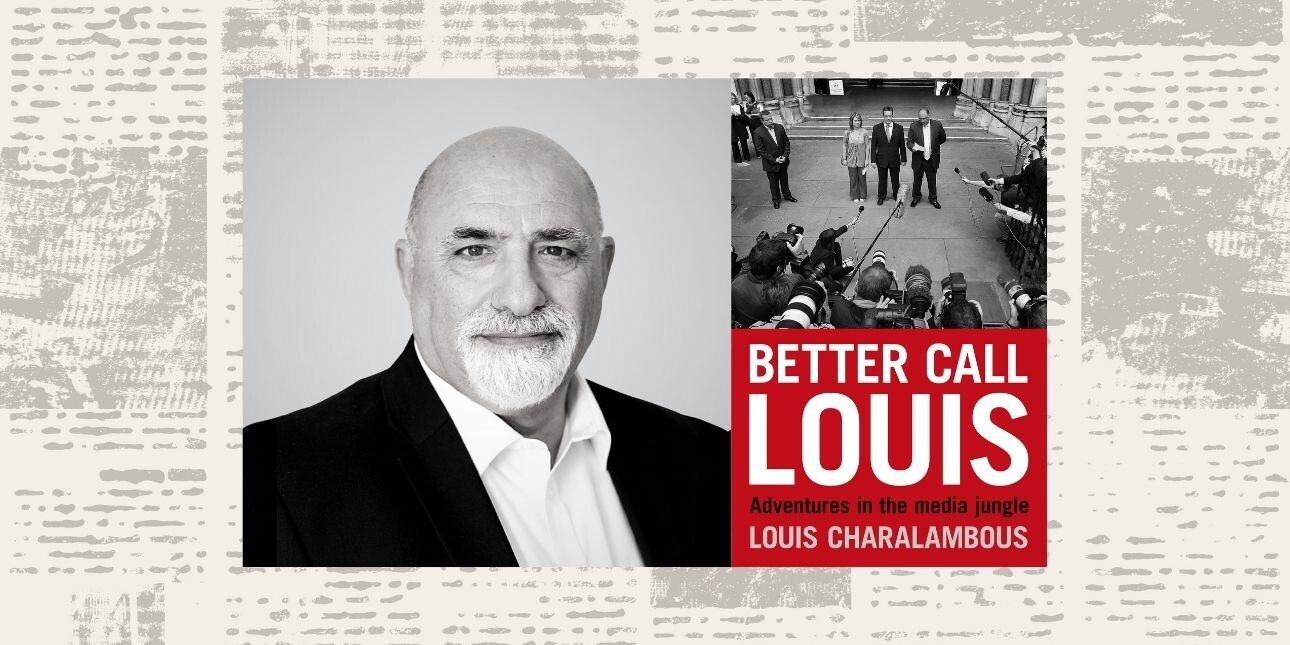
Top media lawyer Louis Charalambous on celeb culture, journalism, PR and the law
From Hollywood heavyweights to BBC scandals, Louis Charalambous’ libel cases have shaped news headlines for decades. But what really fires him up is a strong desire to protect the innocent.
Louis Charalambous, a partner at London-based law firm Simons Muirhead Burton, is widely regarded as one of the country’s leading media lawyers, at the forefront of some of Britain’s most high-profile and contentious legal battles. Yet he never initially envisioned a legal career. “It wasn’t in the mix,” he says. Growing up in Hackney, east London, as the first generation child of Cypriot immigrants, his father worked as a barber and his mother in the rag trade, with their family of five sharing just two bedrooms. Later, after studying at university in Yorkshire, he discovered a passion for political activism and social justice.
Over a distinguished career spanning more than three decades, his cases have included persuading Amber Heard to provide testimony for his client the Sun in their landmark libel case against Johnny Depp, advising Robert Murat after being falsely accused in the Madeleine McCann case, through to the downfall of Huw Edwards. These and many other experiences are vividly recounted in his candid memoir, Better Call Louis: Adventures in the Media Jungle, which pulls back the curtain on the complex interplay between celebrity culture, journalism, and the law.
Politics got me into law. I’d taken two politics degrees first at Bradford then at Leeds and became heavily involved in the Anti-Nazi League and defence campaigns including the ‘Bradford 12’, which turned into a major trial on the issue of self-defence. I attended court every day and decided to become a lawyer as I watched the defence teams win over the jury.
If I hadn’t been a lawyer, I probably would have been a journalist. I flitted between criminal and civil law before finding media law was my niche. Working with National Union of Journalists clients brought me into the media orbit – and I loved it.
My most memorable and most rewarding case was Johnny Depp v the Sun. Our small legal team took on and beat the Hollywood star’s libel action against the newspaper, which the Times’ called the ‘trial of the century.’ The case had everything, including a star performance by his ex-wife, Amber Heard. The story is the longest chapter in the book.

The Paula Yates drugs seizure was my first really high-profile case. I was working at Stephens Innocent at the time, a small but savvy law firm. We were dealing with Paula’s divorce from Bob Geldof, and I was the only one there with criminal law experience. The story, which alleged opium was found in her London house, made several front pages for days. The charges were declined by the crown prosecution service, she got the children back, and she got to present her side to the world.

A libel case against the Sunday Times was my most challenging. David Hunt sued them for libel, we had to prove he really was a crime lord. I went into the criminal underworld. It took several years and involved my journalist and newspaper clients being injuncted, by two police forces. We had to uncover evidence, get key witnesses to come forward, sometimes against their wishes – the trial had all the twists and turns of a thriller.
Almost all my cases have had unexpected elements to them. Often when you’re defending a libel action you wonder why your opponent is suing. What are they going to get out of this? One was Andrew Mitchell, then the Conservative chief whip who sued the Sun over a headline claiming he called a police officer a ‘f***ing pleb.’ He lost the case, which he later described as ‘his fatal mistake.’ Another was Johnny Depp suing the Sun for calling him a wife-beater. I thought with both of those, ‘even if you win, you lose by shining the light on your conduct,’ and I didn’t think either of them would win, but they clearly thought otherwise. Neither of them went on to win their cases.

Working with celebrities has so many aspects which you can't control as a lawyer and may be contrary to what you think should happen. The PRs, agents and managers all want to do and say different things and that can get complicated… working with journalists is simpler.
PR is a very skilled job, and very similar to that of a journalist. I work with PRs if I have a case I know will be very high profile.
If a client comes to me for advice, sometimes I’ll refer them to a good PR instead. PR can give a different perspective and a different view. The skill of great PR is in the statement.
I often say that oxygen can be the worst thing you can give to a story. Because without a statement, a journalist has very little to go on. I’ve often said, ‘don’t respond,’ because without a response there’s nothing to hang a story on – they need one to make it work and get it past their editor.
Given the immediacy of social media, it can be tempting to act quickly. But public relations professionals should consider the long game for their client and how it might play out. If you need to work with lawyers, it’s important you don’t look back and think ‘I wish I’d got the lawyer involved at an earlier stage.’
All PRs should be as familiar with media law as journalists. You’re representing your client, and what you're saying is what your client's saying, so you're putting them in the jam if you say something you can't defend. Remember, repeating what others have said isn’t a defence in libel. These days the majority of cases don't involve established newspapers and TV stations – they’re born out of social media storms.

This job is 24/7 – the calls will come at all hours, and you have to take them. It can be anytime from 8am to midnight, or at weekends. And while you can take a holiday, your client’s problems can’t. You can sometimes involve other people, but often the client wants you and no one else.
Don’t get caught up in your client’s anxiety and don’t rush things. Don’t let yourself be dictated to by the other side and jump into a response too quickly. I often use the phrase ‘How can it come back to bite us?’
Retirement beckons at some point in the next 18 months or so. I’m determined not to take on any more big cases. I want to get back to writing fiction. I’ve got two novels waiting for a publisher.
I don’t do social media. I’m happier for it, I imagine. I’ve seen the downsides too many times.
- Better Call Louis: Adventures in the Media Jungle is out now from Cinto Press.
![]()
Joely Carey is an award-winning magazine editor and journalist who devised the Right to Know campaign, which went on to be adopted into law as the Domestic Violence Disclosure Scheme also known as Clare’s Law, in memory of Clare Wood who was murdered by her ex-boyfriend in 2009.
Repuation management
Louis’s experiences underline just how crucial it is for PR professionals to understand not only the media landscape but the mechanics of reputation itself. The CIPR’s Reputation Management course equips practitioners with exactly that. Find out more and join the course online on 5 February 2026.
Don't miss these interviews
Andy Coulson: 'I enjoy doing crisis comms work because I lived it.'

.png_0f7278855842d9d4461b97b1ec506a3a.png)

