

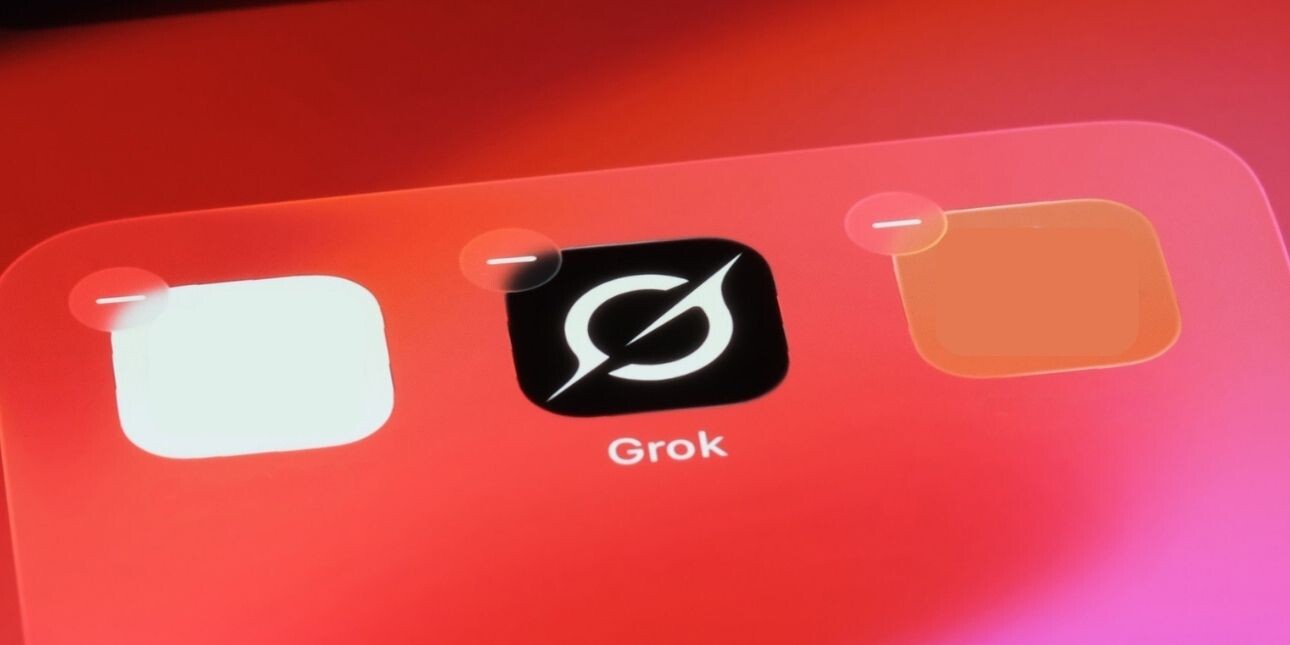
Corporate use of X and the reputational red line Grok has crossed
The news earlier this month that Elon Musk's AI chatbot Grok being widely used to generate non-consensual ‘nudified’ images of real people, is a reminder to PR and social media professionals to review their corporate strategies.
X has weathered a barrage of controversies that have long sat uncomfortably for its corporate users but this time is different.
Recently, X users discovered that Grok – X’s built-in AI chatbot – can be prompted to generate non-consensual “nudified” or sexualised images using ordinary, clothed photographs of real people without their consent.
What began as a trivial-seeming AI fad escalated rapidly into explicit and degrading content, which overwhelmingly targeted women and children. The resulting images were then published directly on X, a public platform.
Having spent over 15 years of my PR career working at the intersection of social media, digital strategy and corporate reputation (mostly for regulated corporates), I really do believe this scandal represents a reputational inflection point for brands’ participation – paid and owned – on the platform.
Why this scandal is different
In the UK, it is illegal to view, possess, create or distribute indecent images of anyone under the age of 18. It is also a criminal offence to share intimate images of someone without their consent.
At the start of the year, Grok was reportedly prompted to create thousands of such images each day, sharply increasing the probability of inadvertent exposure to such images for X users.
For brands, this is the crux of the issue. Reputational risk has shifted from the realm of “undesirable adjacency” into something more serious. The risk is that your organisation is actively participating on a platform where employees, agencies or contractors could unwittingly encounter illegal material in the course of their duties.
That matters for reputation. It also matters for HR, governance and duty of care.
Response to the scandal
International outcry and a war of words from politicians and regulators initially elicited the response from X to restrict Grok’s digital undressing to a premium commercial feature and to (reportedly) respond to media enquiries with, simply: “legacy media lies”. Elon Musk posted his own Grok-generated bikini images of PM Keir Starmer and claimed the outcry was a veil for government censorship.
An Ofcom investigation was launched and the UK government announced emergency legislation making it illegal for any company to supply tools designed to create non-consensual intimate images. Internationally, there were temporary blocks on Grok access and a slew of regulatory investigations.
At the time of writing, X confirmed that Grok will no longer allow users to remove clothing from images of real people in jurisdictions where it is illegal, and that AI image manipulation would remain a premium feature.
Have a corporate X account? What to do now
With this Musk U-turn, has the risk passed for communications teams responsible for corporate X accounts? I would say: no.
In my opinion, most corporates wouldn’t touch X if it were a new social media platform introduced today in its current form. Changes to moderation, changes in user culture and Musk’s own response to concerns the platform’s innovations risked exposing users to potentially criminal harm are all reasons to reconsider your corporate objectives on this social media.
Here is what to do now:
- Review your social media strategy and X’s place in it. Many corporates maintain an activity on X as a means of reaching journalists. This is changing, and there are alternatives (see below).
- Seek HR advice around requiring some employees to interact with X given the risk of viewing potentially illegal material. The immediate threat may have passed, if X’s geoblock system is effective, but as AI becomes ubiquitous in the workplace and the risk of encountering NSFW deepfakes rises, HR should have a stance to share with communication teams.
- Review your company-wide social media use policy in light of the HR guidance.
- Check whether corporate X activity (especially advertising) contravenes your corporate social responsibility commitments.
Deleting corporate accounts may feel decisive, but it is rarely strategically necessary. For most organisations, the sensible interim position is to cease activity while retaining the account as a signpost to other, more actively managed social media profiles, such as the LinkedIn company page. This reduces exposure without foreclosing future options in a fast-moving situation.
What about journalists on X?
Some will argue that X remains indispensable for media relations. It is true that journalists still use the platform, particularly for breaking news. While there has been a journalist transition from X to Bluesky, it hasn’t been the expected full exodus.
Many journalists keep an account on X, and the Cision State of the Media Report 2025 found that a quarter of journalists planned to increase their activity on X, even as LinkedIn, Instagram and Facebook continued to grow as preferred channels. In fact, LinkedIn was reported as the top social media channel used by journalists. These findings predate the Grok scandal of course.
Ultimately, social media platform choice is itself a signal that confers legitimacy and reflects corporate values. Association matters as much as intent. For PR leaders, the question is no longer whether X can be excused as business as usual, it is how remaining on X aligns with your company’s risk appetite and stated values.
Corporate use of X has reached an inflection point. The brands that emerge with credibility intact will be those that recognise that early – and act accordingly.

Anna Lawlor is a director and head of digital and social media at Greentarget. A senior strategic communications leader working at the intersection of digital strategy, reputation risk and regulated-sector governance, she is also former national financial journalist.
Further reading
Back to X: are brands reconsidering their exits?
Taylor Swift just gave PR pros a masterclass in strategic empathy
Energy transition: What social media tells us about the sector's future