


Neurodivergence: nurturing the strengths of PR's hidden advantage
As the CIPR launches its Neuroinclusion for Managers course, four neurodivergent PR leaders explain how inclusion, empathy and better systems can unlock creativity, resilience, and commercial success
The launch of CIPR’s new Neuroinclusion for Managers course is a response to a conversation that’s been long overdue in PR and communications.
Developed and taught by CIPR tutors Dannie-Lu Carr and Kate Isichei, it argues that the problem has never been with neurodivergent people (roughly one in five of the population), but the rigid systems they’re asked to operate within. And it asks: what happens when neurodivergent professionals are supported and encouraged to show up as themselves – and to let their strengths shine?
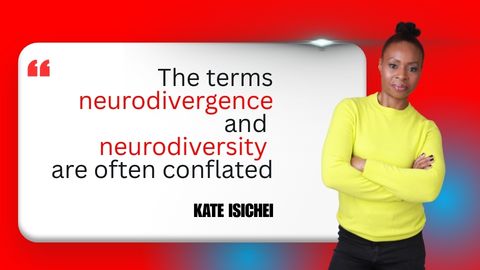
“The idea of the course is to get people understanding neurodivergence – as opposed to ‘neurodiversity’, because the terms are often conflated,” says Isichei.
“From there, we talk about how to support employees presenting as neurodivergent, those who suspect they are – or who may not even be aware of it. We look at what neurodivergence is like for the individual, and how managers and communicators can provide a supportive culture.”
The aim: to help people feel “happier, more included, and like they belong,” says Carr. “If you're not tapping into that diversity, you're missing out on potential opportunities to really utilise them and raise the bar.”
A silent crisis
Neurodivergent people have always been part of the workplace, creating, innovating and problem-solving. And they’re especially represented in the media, the performing arts and the creative industries in general, including advertising, marketing – and PR.
According to a joint 2025 study from Understood.org, 4A’s, and Havas called Unlocking Neurodiversity: A Creative Advantage, 48% of creative professionals are neurodivergent. While outlets such as Marketing Dive and HR Dive have found that “nearly one in two creatives identify as neurodivergent.”
What’s changing is not their presence, but our willingness to name it, understand it – and crucially, ask whether the environments we’ve built are fit for the minds that fuel them. And that includes the comms industry.
Ironically, as Isichei points out, neurodivergence sits at the heart of communication itself. “Neurodivergence is primarily related to social interaction and communication. The way we interact with each other as human beings is greatly affected by an individual’s neurotype.”
Yet according to the research, 90% of neurodivergent creatives feel they have to mask (suppress innate traits or behaviours) just to “fit in” and “Managers and leaders don't understand it,” says Isichei. “Neurodivergent people are having to go to tribunals, and payouts are taking place, just because managers are still reacting negatively to certain behaviours and traits.”
And when neurodivergent creatives are unsupported or feel they can’t bring their full selves to the work, creativity suffers, retention drops and turnover increases.
Challenges and struggles
Armand David, Director of Internal Communications & Culture at BT Group, co-founded the WhatsApp group, Comms Neurodivergence Network (“CNN!”) with Paul Nolan in 2025. “Neurodivergence on the whole is quite challenging for comms,” he says. “Our job is literally to stand up and shout from the rooftops… If I was introverted or suffered from other aspects of neurodivergence, I’d struggle.”
“Is PR well suited to neurodivergent people?” asks Nolan. Though his PR career has been hugely successful (progressing from a senior account executive to chief communications officer at CCGroup PR and co-MD at The Hoffman Agency), Nolan emphasises how much he’s had to mask en route. “I’ve had to fight through an awful lot of pain, while struggling to the finishing line.”
PR, he says, “doesn’t offer nearly enough certainty or control to really get the best out of a neurodivergent person, who does their best work when they’re feeling safe, appreciated and in control. The truth is the factors determining our success are predominantly outside of our control.
"Take media relations at junior levels, there’s often an awful lot of pressure riding on a story. We’re expected to manage how a journalist will perceive it, compete with the day’s news agenda, and ensure they write something positive, to be seen as successful and valuable.”
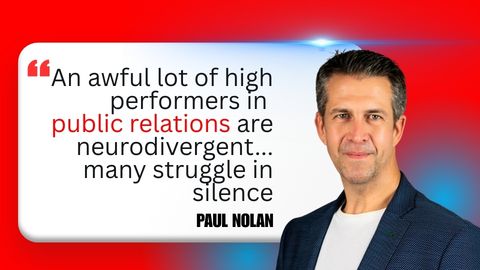
This often causes sustained high levels of anxiety for neurodivergent people – this can lead to exhaustion – or burnout. “An awful lot of high performers in public relations are neurodivergent,” says Nolan, “and many of them are struggling in silence. You’re constantly climbing that mountain, and you never feel like you get to the top. But you force yourself to keep going.”
Nolan’s words speak to the profound inability of many neurodivergent individuals to recognise and celebrate their own successes. “And as inherent people pleasers, which neurodivergent people are, any kind of disappointment or perceived rejection hurts treble than it does for a neurotypical person,” he adds. “A simple bit of bad news can floor you for days.”
The empathy myth
One of the most persistent myths about neurodivergence is a supposed lack of empathy – something Carr dismisses outright. “It’s nonsense,” she says. “It’s over-simplification, and it’s ignorance. Chris Packham is autistic, and I don’t know anyone who fights more for the planet and nature than he does, because he has such empathy for it.” For those with ADHD, she notes, the issue is often one of over-empathising – to the point where “you have to protect yourself.”
Adds Isichei: “An empath is someone who deeply feels other people’s emotions. And most neurodivergent people are like that.” The problem isn’t lack of empathy – it’s overwhelm.
“If I walk into a networking event, I’ll immediately absorb everyone’s emotions and want to run away. Often, neurodivergent people will go to the toilet or to a space where they can decompress. I’ve spoken to people with ADHD, not just autism, who when they’re in a room, really need that break to breathe, close their eyes and decompress. That’s when people start thinking, ‘This person’s being uncooperative or lazy.’ It’s not that. They’re just trying to absorb and reflect on what they’re experiencing. I’ve learned to be an extrovert at networking events – but you need time to recover.”
Many employees will be later-life diagnoses, which can be especially challenging (as this writer can attest, with a diagnosis of ‘moderate to severe’ ADHD, aged 54).
As Nolan says, “It’s good to have an explanation, especially when it comes to things like emotion regulation and rejection sensitivity”. But it can also lead to a real identity crisis – for Nolan and other diagnosed family members: “What if I’d known at school? What if? . . . It’s normal to go travel that journey.”
Creating community
Fear around disclosure remains acute. “People don’t have to disclose,” Carr says. “You don’t owe anybody an explanation.” Nolan agrees: “It’s not up for us to tell other people what they should or shouldn’t do.”
Rather, says Isichei, “However it is important to create a culture in which people feel comfortable disclosing.”
One way is to create a community. What began as a WhatsApp group quickly became a vital peer-support network.
As David explains, Comms Neurodivergence Network was born from a desire to give people the confidence to disclose. “When you have the privilege of a position of seniority, you can make a space for others. Paul and I had 40 or 50 people signing up that first weekend.” And the numbers have kept growing.
Says Nolan: “Armand’s group is such a good idea, because there are so many people who suspect or know they’ve got some sort of neurodivergence but worry about what it’s going to mean for their career.”
Adds David, “People didn’t feel they had anyone to talk to – and now they feel validated in an environment in which they can ask questions: ‘How do I handle this situation? What adjustments can I ask for?’”
There’s been a sense of “instant recognition” among group members: “This is not a preexisting network of friends,” says David. “They’re people being profoundly vulnerable, honest and open, and searching and supportive. That’s the whole point.”
Even without support networks, neurodivergent people very often recognise their fellow ‘zebras’. Says Nolan, “I’m not the only neurodivergent person in our business, so if I don’t spot it, somebody else will. We also don’t have to label somebody to be able to help them – or recognise what they can bring. It’s all about building a team that sees people playing to their strengths and not being hammered for their weaknesses. That’s just basic management common sense.”
Says David, “Inclusion is a commercial necessity – especially when you serve a wide variety of clients. If we don’t have those people in our industry, we won’t get a proper perspective.”
Strengths and superpowers
Though framed as a disability, many people with neurodivergence will describe it as a superpower. “Hyperfocus helps me be one of the fastest copywriters out there,” says David.
“I know how to resonate with people and build relationships,” says Nolan. “In such a people-dominated industry, that’s a huge superpower.”
Carr points to the fact that most of history’s great geniuses and innovators, from Leonardo da Vinci to Mozart and Einstein likely had some form of neurodivergence. “There are so many strengths that neurodivergent people bring. And if you’re not tapping into that within your team, you’re missing out on potential opportunities.”
Speaking from her own experience with “a presentation of autism, dyspraxia, and ADHD,” she describes an ability to “multitask like a demon. And when it comes to creative thinking and campaigns, I can come up with ideas really quickly. People say, ‘Oh, my God, how can you do all this stuff?’ I'm clumsy as hell practically, but I'm really good at creativity pattern spotting and recognising connections and links, and how we can use them.”
Says David: “Stereotypes exist for a reason, and for a lot of my dyslexic colleagues, their dyslexia is a superpower. Some people with dyslexia are better visual thinkers and therefore make faster connections. Some of us with ADHD can think fast, come up with loads of sparky ideas, hyperfocus and produce more work in a shorter period of time than neurotypical people.”
Meaningful change
Supporting neurodiversity needn’t require a complete organisational overhaul, but it does demand meaningful change. As Isichei says, “All it takes is a bit of understanding and adaptability in a management approach to support their way of working. Don’t try to fix it, instead work with it.”
For Carr, the responsibility is clear. “They have to create spaces of psychological safety and build a culture around that.”
Says David: “I’m a big advocate for inclusive ideation, making sure we have quiet work spaces, and whatever else might be required for different individuals. The adaptations you will make for neurodivergent people might be similar to ones you need to make with people from different cultural backgrounds, and similar to the ones for people with disabilities. There will be overlap.”
Nolan says: “When we’ve got new people coming in, we let them know we are a safe space for anybody. We want people to feel comfortable to be themselves.”
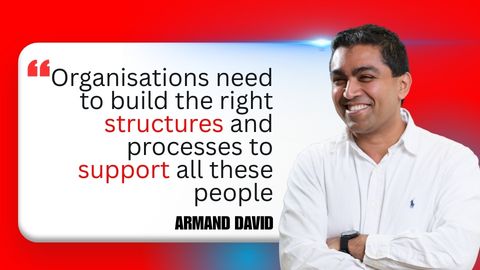
Says David: “You can’t treat neurodivergent people as a single cohort. So organisations need to build the right structures and processes to support all these people. It’s probably a few years away before it’s mainstream, because of the nuance required, and the variety of different adjustments required. But while it’s a big shift, I am amazed at how much progress we’ve made compared to a couple of years ago.”
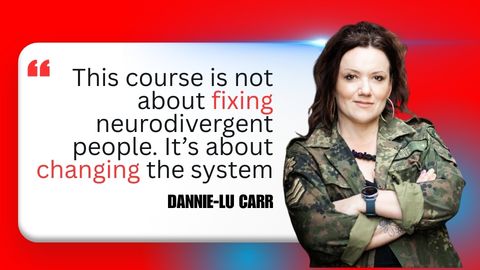
For Carr, the relevance to PR is obvious. “It’s literally all about relations, isn’t it? It’s all about people. So, being better able to understand ourselves and one other means we can actually be of more service to the PR community.”
She shares a sentiment from her partner, who has worked in disability: “We say that people are disabled – but they’re only disabled by the way the world is built around them. I love that.” In the same way, this course is “not about fixing neurodivergent people. It’s about changing the system. I’m really proud we’re doing this.”
- Create a team culture that truly supports neurodiversity and unlocks the strengths of neurodivergent talent. Join the CIPR’s new Neuroinclusion for Managers course, taking place online on 25 February.
If you are interested in finding out more about the Comms Neurodivergence Network WhatsApp group or if you would like to join, you can reach out to Armand David on LinkedIn.

Ali Catterall is an award-winning writer, journalist and filmmaker whose writing has featured in the Guardian, Time Out, GQ, Film4, Word magazine and the Big Issue, among many others. Ali is also the writer and director of the 2023 film Scala!!!
Further reading
Is your unconscious bias rejecting neurodivergent job applicants?
PR with an ADHD brain: Why variety helps me thrive
Four excellent books about ADHD, autism, dyslexia, and dyspraxia