

Climate risk is reputation risk: lessons from Sri Lanka for UK communicators
Climate disruption now exposes failures of governance and trust as much as infrastructure. The experience of Cyclone Ditwah in Sri Lanka shows why communicators must treat climate risk as a public safety and reputational issue.
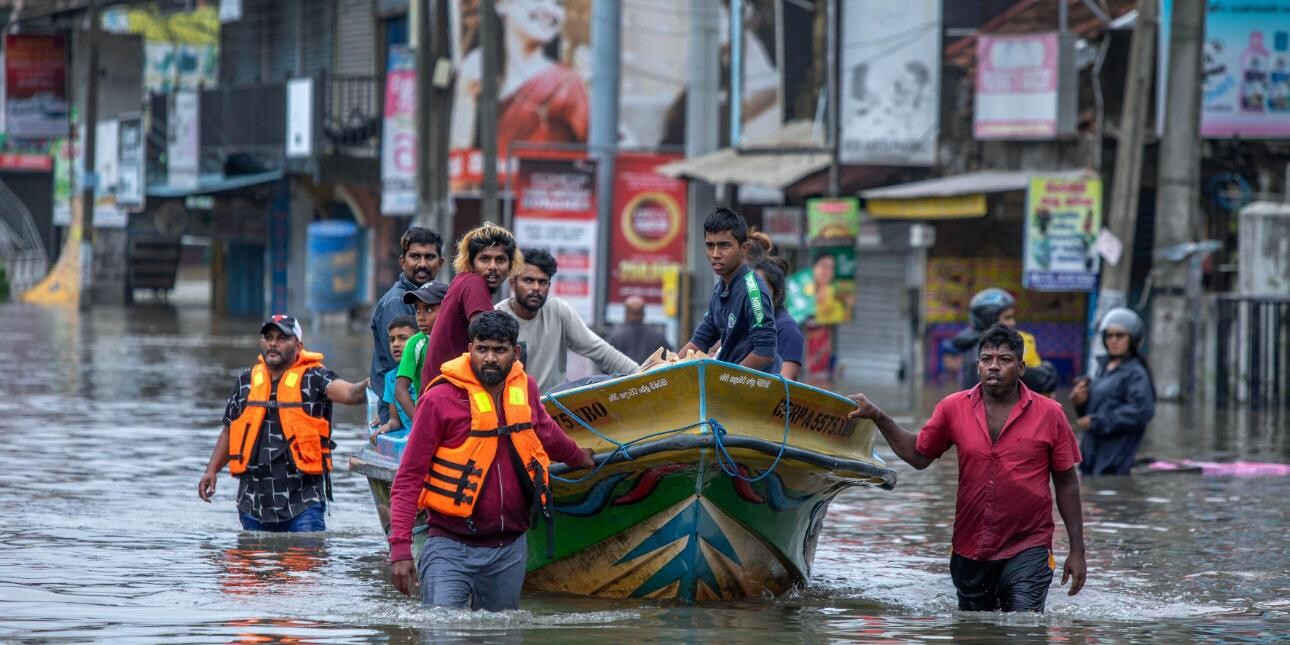
Climate risk is no longer a future horizon issue or a discrete ESG consideration. In Sri Lanka, it has become a test of institutional legitimacy. Cyclone Ditwah exposed the consequences of treating communication as a downstream activity rather than a core public safety and governance function.
Despite early meteorological warnings, communication ahead of Cyclone Ditwah was fragmented, inconsistent and insufficiently accessible across all three official languages. Messages varied by platform and authority, creating uncertainty about severity, timing and required action. Emergency services and public bodies appeared unprepared not only operationally, but communicatively.
The result was a collapse in confidence at the precise moment when trust was most needed. The consequences were tragic. Preventable loss of life forced a conclusion that should resonate well beyond Sri Lanka; communication failures can be as consequential as operational failures. Cyclone Ditwah demonstrated that crisis communication is not the act of issuing alerts. It is the coordination of information, authority, language and accountability. Without those elements, even accurate data loses its power to protect.
From natural disaster to reputational reckoning
The reputational consequences of climate disruption have shifted fundamentally since the 2004 tsunami. Then, failure was largely attributed to the scale of the event itself. Today, failure is attributed to governance. The central question is no longer, what happened, but what was known, when, and how that knowledge was acted upon. For UK organisations, this mirrors a tightening regulatory, ESG and litigation environment. Climate events increasingly trigger scrutiny of decision-making, risk disclosure and internal coherence. Warning systems are treated as proxies for preparedness. Leadership visibility is read as accountability.
Communication is assessed not as narrative management, but as a mechanism that either enabled or constrained informed action. Digital visibility has collapsed the distance between operational failure and reputational consequence. Contradictory statements across agencies or business units are interpreted as governance breakdowns. Delayed acknowledgment is framed as concealment. Reassurance without evidential backing is seen as transferring risk from institution to citizen. In this context, climate disruption functions as a stress test of legitimacy.
It exposes whether organisations understand their duty of care, whether internal risk assessments are reflected honestly in public communication, and whether boards are exercising meaningful oversight of climate risk.
Three lessons Sri Lanka offers communicators
1. Under warning and over reassuring undermine regulatory confidence
Ahead of Cyclone Ditwah, technical forecasting existed, but public communication lagged behind internal knowledge. Optimistic or ambiguous language created a gap between institutional understanding and public expectation. When impacts escalated, that gap became a source of anger and blame. For senior communicators, this has regulatory implications.
Reassurance that is later contradicted by events undermines the credibility of risk disclosures and resilience statements. Candour about uncertainty, limits of preparedness and potential trade-offs is reputationally and legally safer than confidence that later collapses under scrutiny.
2. Last mile failures expose ESG credibility gaps
Warnings that failed to reach all communities were not framed as technical shortcomings, but as failures of responsibility. Language barriers and channel limitations became symbols of exclusion. In ESG terms, this matters. Claims about social responsibility, stakeholder inclusion and resilience are tested most severely in moments of crisis. Reputation is shaped by who was protected, not by the existence of a policy or framework. Inclusive communication is now a material test of ESG credibility.
3. Silence and defensiveness increase litigation risk
Some of the most enduring damage occurred after the cyclone. Slow responses, opaque explanations and defensive language prompted public inquiries, civil society mobilisation and long-term scepticism. From a UK perspective, this pattern is familiar. In climate-related incidents, delayed acknowledgment and legalistic positioning often escalate, rather than mitigate, litigation and regulatory risk. Silence is interpreted as bad faith. Defensiveness signals misalignment between public statements and internal reality.
Trust built in crisis and earned in recovery
Sri Lanka’s communications culture has been shaped by repeated national shocks. The end of the civil war in 2009 created expectations around reconciliation and accountability. The economic crisis of 2022 further transformed stakeholder relationships, forcing organisations to communicate with unprecedented transparency and empathy. Corporate communications shifted from promotion to explanation. Stakeholders expected organisations to justify decisions, acknowledge hardship and demonstrate social responsibility in tangible ways.
Purpose driven communication moved from a branding exercise to a test of legitimacy. For UK practitioners, the lesson is clear. Trust is not built through polished messaging in stable periods.
It is earned through honesty, consistency and presence during disruption, and sustained through accountability long after the immediate crisis has passed.
The UK implications: climate, trust and accountability
As floods, heatwaves and storm damage become more frequent in the UK, the reputational dynamics Sri Lanka has experienced for years are becoming familiar. Climate events increasingly raise questions of foresight, fairness and responsibility, not simply response. Communicators therefore sit at the intersection of public safety, regulatory confidence and organisational legitimacy. Climate risk must be embedded into scenario planning, executive decision making and disclosure frameworks. Messages must be designed for scrutiny, comparison and longevity. ESG commitments must survive contact with lived reality. Sri Lanka shows what happens when climate disruption outpaces communication preparedness. For UK organisations, it offers an opportunity to recalibrate before climate risk becomes the defining reputational fault line of the decade.

Rishini Weeraratne is an award-winning media personality from Sri Lanka and currently serves as the editor of the Sun supplement in the Daily Mirror Sri Lanka, and the head of strategic partnerships and external communications at D3 Collective (UK). She is also the ambassador in Sri Lanka for the Chartered Institute of Public Relations (CIPR, UK) and The HALO Trust.
Further reading
Cop30 exposed the gap between Brazil’s climate ambition and delivery
Rebuilding Jamaica after Hurricane Melissa: how can PR and comms help?
Valencia floods: we need to revisit our disaster communications