

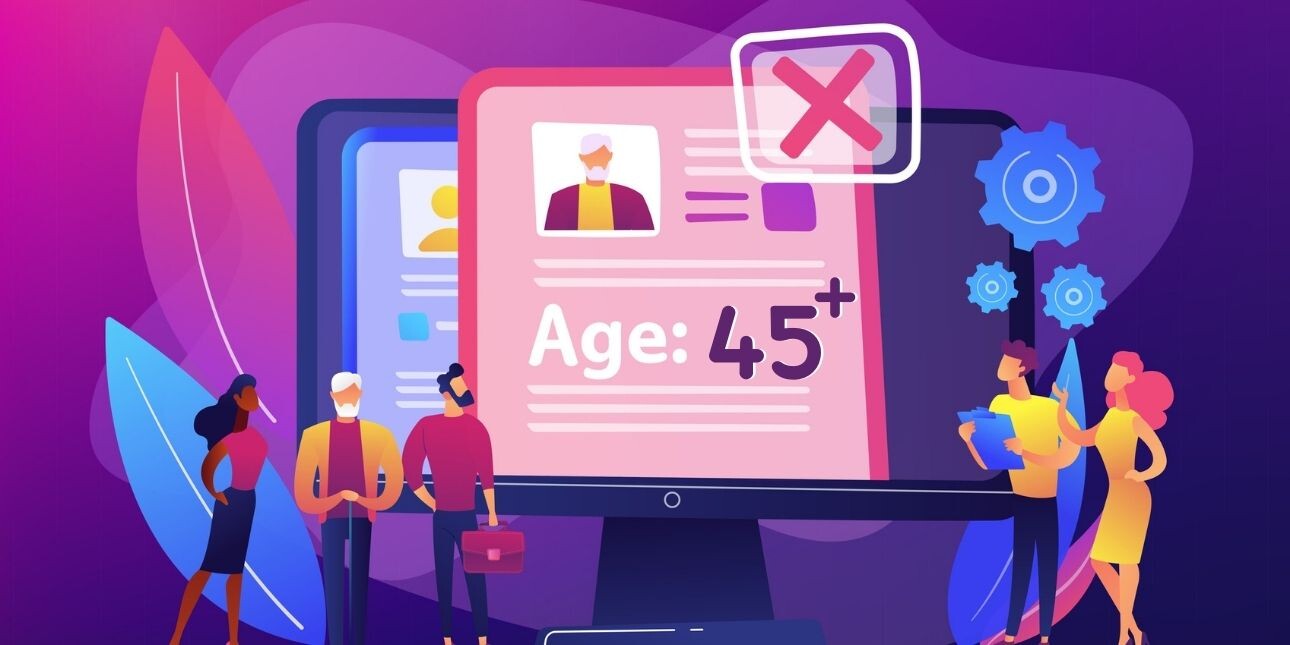
Will AI break the PR age gap or automate the bias?
To prevent AI from becoming an ageist gatekeeper, PR leaders must move beyond passive adoption and toward active governance – with a fundamental shift in how we value human contribution at every level.
In PR, the horizon is usually crowded with new faces, fleeting trends, or shiny platforms. But today, the "thing" is AI. As firms rush to integrate large language models (LLMs) into their workflows, a quieter, more systemic issue remains lurking in the hallways of agencies and in-house departments: ageism.
For years, the PR industry has struggled with a "youth-obsessed" reputation. Experience is often traded for "digital nativity”, and senior practitioners – those with decades of strategic wisdom – find themselves sidelined in staff meetings, sometimes even enduring the indignity of being called "Grandma" or "Mum" by colleagues half their age as highlighted in my own CIPR-funded research published last year. Now, as AI becomes the primary architect of communication and recruitment, we face a pivotal crossroad. Is AI the tool that finally levels the playing field, or is it an automated gatekeeper reinforcing the barriers that keep seasoned talent out?
The promise: Can algorithms be more objective than humans?
On the surface, AI offers a utopian vision of meritocracy. In recruitment, the "black box" of an algorithm can be designed to ignore the dates on a CV that often trigger unconscious bias.
Traditional recruitment is rife with "micro-biases”. A recruiter might see a graduation date from 1995 and subconsciously label a candidate as "expensive" or "set in their ways" or even make the judgement that the individual is “overqualified”. AI-driven anonymised screening tools in theory have the potential to strip away these markers, focusing purely on skills-based hiring. By analysing a candidate's portfolio and competency scores rather than their career length, AI can bring seasoned experts back into the fold based on what they can do, not when they started doing it.
The risks: When bias becomes automated
Despite its promise, AI is not a neutral arbiter; it is a mirror reflecting the data it was fed. If that data is tainted by the industry's historical obsession with youth, the AI will simply automate that discrimination at scale.
If an AI model is trained on hiring data from an industry where only 21% of professionals are over the age of 50, it will learn that "success" looks like a 26-year-old "digital native”. This could lead to algorithmic bias, where the system quietly de-prioritises candidates who don't fit the demographic profile of past hires. If your organisation or agency uses AI as a recruitment tool, how confident are you that it is genuinely age-blind when you look round the office and see so few people aged 45+ working for your organisation?
The visual narrative is equally exclusionary. Ask an AI image generator for a "PR team brainstorming”, and you’ll likely get a sea of gen Z faces in a minimalist office. This unintentional erasure reinforces the idea that once you hit 45, you are "part of the furniture" rather than a strategic leader.
More concerning is the structural impact on the "squeezed middle”. In the current PR ecosystem, we see a widening chasm:
- Juniors: Using AI to churn out first drafts, press releases, and social copy.
- Seniors: Making high-level strategic decisions and managing client relationships.
- Middle Managers: This group – the future senior leaders of tomorrow – is being hollowed out. If AI replaces the "doing" that middle managers once supervised and refined, they lose their training ground. We risk creating a workforce where the leap from tactical to strategic becomes an insurmountable wall.
Building an age-inclusive AI future
To prevent AI from becoming an ageist gatekeeper, PR leaders must move beyond passive adoption and toward active governance. Building an inclusive workplace requires a fundamental shift in how we value human contribution at every level.
- Audit the algorithm: We must demand transparency from HR tech providers. Ensure that "years of experience" isn't being used as a hidden proxy to filter out older candidates.
- Intergenerational prompting: We should foster reciprocal mentorship. Younger employees can share technical AI tips, while senior staff provide the historical context, ethical nuance, and "human" gut feeling needed to make AI output truly impactful.
- Redefine the career path: Acknowledge that AI handles the volume, but humans handle the value. We must protect the "middle managers" by shifting their roles toward AI orchestration and high-level editing, ensuring they remain the pipeline for future leadership.
The verdict: Help or hindrance?
AI is a double-edged sword. It has the power to strip away the human prejudices that have long plagued PR recruitment, but it also carries the risk of codifying those same biases into invisible, unbreakable code.
For the PR industry to thrive, we cannot afford to lose the institutional memory and strategic depth of our older practitioners. AI should be used to augment human expertise, not replace it. PR leaders must champion age diversity as a core component of their AI strategy. By doing so, we don't just build better campaigns – we build a more resilient, inclusive, and sophisticated future workforce. The skills and expertise that older PR professionals isn't a liability; it's a superpower. It’s time our technology – and our culture – recognised that.
Key takeaways: Championing age-inclusivity in the AI era
Audit your tech stack: Ensure recruitment algorithms aren't filtering out talent based on career length or graduation dates.
Human-in-the-loop: Rely on senior practitioners for the ethical oversight and nuance that AI currently lacks. Charity Comms has a particularly excellent framework offered through its AI Hub which looks at what is needed from practitioners for this.
Bridge the digital divide: Invest in AI literacy for all, pairing senior strategic "why" with AI's technical "how."
Protect the pipeline: Shift middle-manager roles from "creators" to "AI orchestrators" to keep the leadership path open.
Diverse visuals: Explicitly prompt for age-diverse imagery in AI generators to avoid erasing older pros from the narrative. Or use image libraries, which feature real older people such as the Centre for Ageing Better’s free image library available through its Age Without Limits Campaign.
.jpg)
Jenny Manchester is a strategic communications leader with over 20 years of experience spanning the non-profit, public, and local government sectors. The former head of communications at the Centre for Ageing Better, she is the author of the landmark CIPR-funded research, What can we do to tackle ageism in PR, published in September 2025. She is currently focused on ensuring the industry’s transition to AI preserves the strategic value of experienced practitioners rather than automating them out of the conversation. You can read more about her thoughts on ageism and PR through her Substack.