

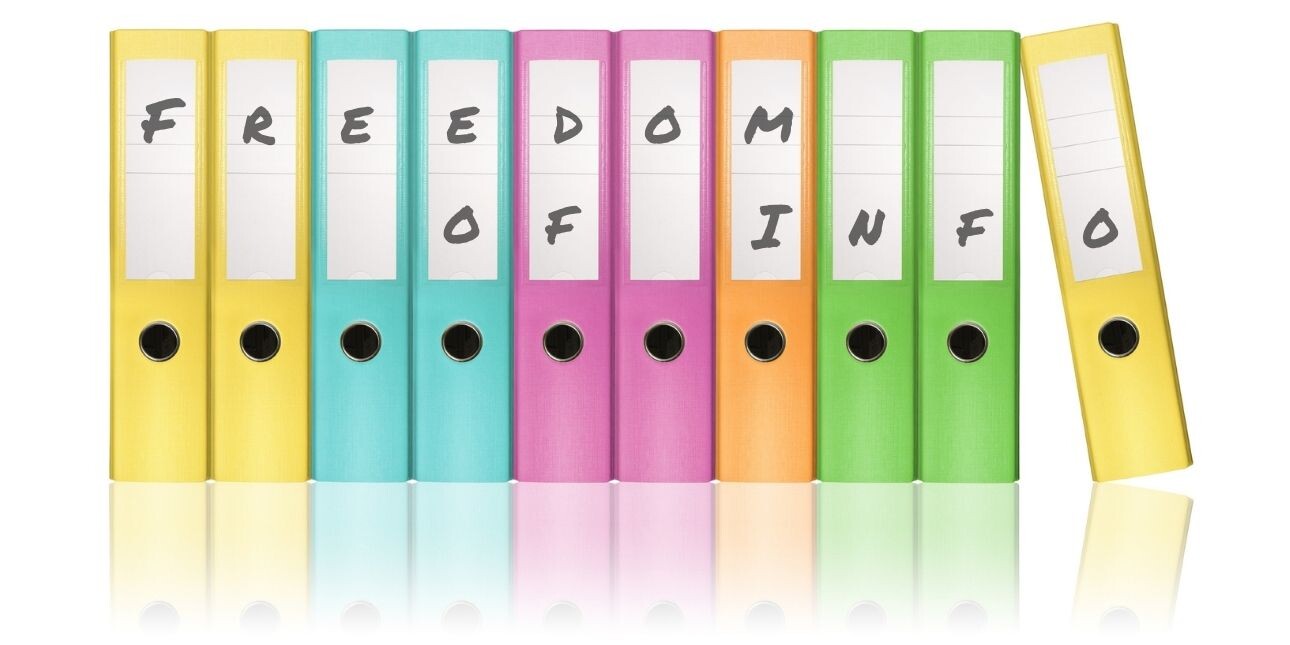
Restricting FoI requests would nibble away at transparency
Reports that the government is considering restricting Freedom of Information requests by lowering the cost limit should concern us all.
Stopping briefly near the summit of a snow-capped mountain, Sean Bean delivered one of his more famous lines: “It is a strange fate that we should suffer so much fear and doubt over so small a thing. Such a little thing.”
Though Boromir was referring to the One Ring, his words could as easily be describing the attitude of various governments to the little thing that is the trio of letters ‘FoI’.
After all, ever since the Freedom of Information Act was introduced in 2000, efforts have been made by governments of differing hues to reduce its reach. Proposals to introduce fees, narrow the scope of requests, and expand exemptions have, at times, briefly surfaced.
Even Tony Blair, whose government introduced the act, later recanted his support. Proving again that there exists no zeal greater than that of a convert, Blair described the act as a blunder, writing in his memoir that the thought of the “three harmless words’ freedom of information made him ‘feel like shaking [his] head till it drops off [his] shoulders".
It is not surprising, then, that the government is reportedly mulling plans to restrict on FoI requests by lowering the cost limit. The growing number of requests has caused costs to balloon, according to ministers, necessitating action to alleviate the apparent pressure on the public purse. Initially at least, such an argument might command some sympathy: in 2024, an additional 12,566 requests were filed, increasing costs in lockstep.
Yet this concern is at once misplaced and overblown. As the CIPR’s President has noted, not only should the increase be read as a sign that the legislation is working – that the public is actually making use of the act – but 90 per cent of the increase is reportedly attributable to the one-off transfer of Ministry of Defence records. In other words, a single, exceptional transfer is responsible for the swelling figures.
FoI, public awareness and communications campaigns
The reported clampdown should be a real concern for the public relations industry. Freedom of information requests sit at the heart of many effective public awareness and communications campaigns, providing the raw material for stories that might otherwise never come to light. Health inequalities, child safety concerns, the use of invasive surveillance techniques and unanswered 101 calls have all been uncovered thanks to the Freedom of Information Act. Businesses, too, can use the act to source data to craft campaigns and messages, based on reliable, authoritative data, that really resonate both with their target audience and the press as whole.
But more than that: if the public relations industry is to realise its ambition to hold power to account, and to engage in honest and open communications, it should recoil at what would amount to a concerning reduction in transparency. Freedom of information provides a window into the heart of government, and a means of assessing how power is being wielded. It is, in short, a vital means of assessing and confronting power. It was freedom of information, after all, that saw millions of invoices, receipts and letters published during the infamous MPs’ expenses scandal, which alone should stand as testament to the power of the act.
Corporate interests and free hospitality
Alone, the FoI proposals ought to spark concern, but when combined with other recent developments the picture becomes more concerning still. It largely escaped notice, but earlier this year the parliamentary committee on standards proposed redacting the names of staffers. Innocuous though this might sound, the move would leave the public unable to see which staffers are undertaking work for corporate interests or accepting free hospitality or foreign trips.
Put another way, it would become significantly harder to identify potential conflicts of interest. As the CIPR thundered in response, the proposals “would rend open another hole in the UK’s already threadbare lobbying regime”, which is already the least transparent in the west.
And this is against a backdrop of the well-known delays to publishing ministers’ interests, with disclosures regularly appearing months after the relevant activity has taken place. The UK’s Lobbying Act, meanwhile, is so full of loopholes that it ensures most lobbying takes place in the shadows, where public mistrust readily foments.
The philosopher Edmund Burke was probably not on a mountain when he said that the “true danger is when liberty is nibbled away, for expedience, and by parts”. And if there was ever evidence of the essential truth of his warning, the piecemeal erasure of transparency is surely it, of which the potential restriction of FoIs may prove the most significant.

Max Jewell is a director at Farrer Kane & Co, which is a CIPR corporate affiliate member.
Find out more about a CIPR corporate affiliate membership
Strengthen your reputation and invest in your team’s success. Join as a CIPR Corporate Affiliate member - open to groups of five or more.
Further reading
How PR pros can maximise visibility for their clients in an age of AI
What does the new police and media charter mean for PR?