

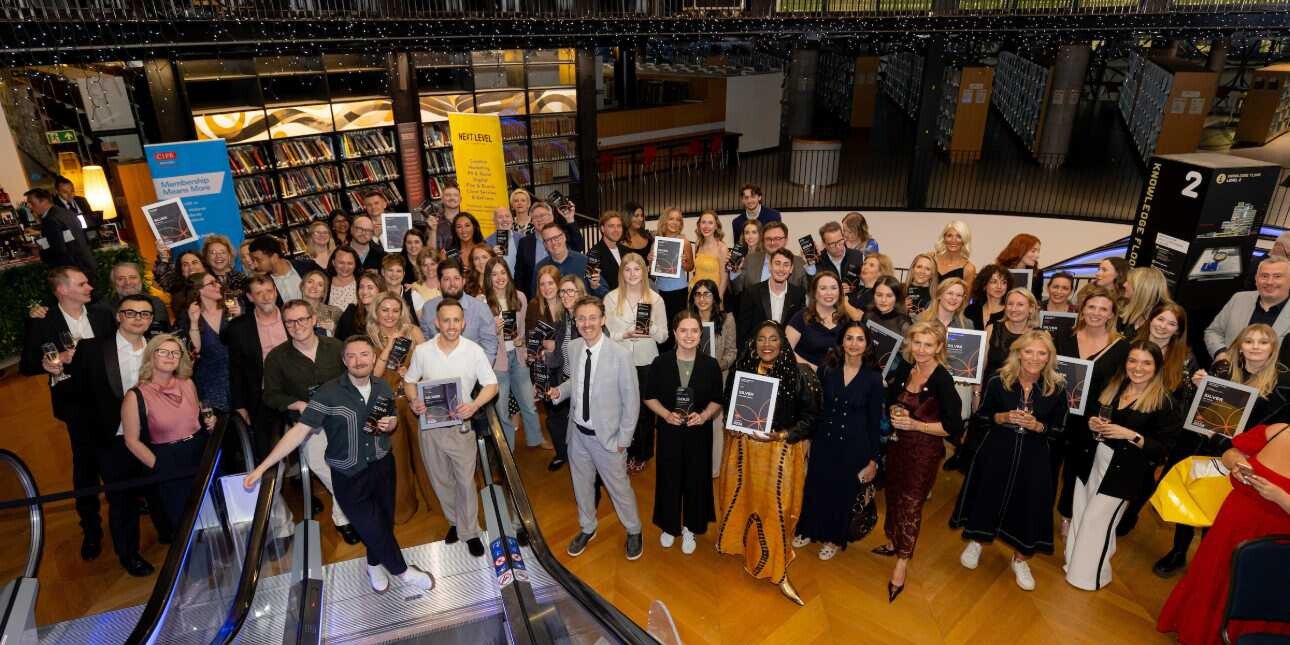
How we did it: Creating a regional PR awards programme with a sense of pride
The chair of CIPR Midlands explains how the group built a new awards scheme that recognised the region’s talented communication professionals.
There’s something powerful about creating something from the ground up, particularly when it’s driven by a shared belief.
Over the past year, I’ve had the privilege of being part of the team behind the inaugural CIPR Midlands Awards - a new programme designed to celebrate the depth, diversity and quality of public relations practice across our region. It’s been a significant undertaking, shaped by collaboration, commitment and a genuine passion to shine a light on the talent that exists beyond the usual spotlight.
CIPR HQ announced the discontinuation of the PRide Awards in December 2024, a decision that landed heavily with many of us and left a noticeable gap for regional recognition within our industry. What followed was not a centrally coordinated response but something far more powerful: regional action.
Learning from experience
Wales took the first step, launching a national awards programme in 2025. Their experience provided a useful learning experience for those considering a similar path. Candid discussions outlined the pitfalls: this would not be easy but it could be done.
Cash flow was identified as an issue, particularly balancing the books with time delays between incomings and outgoings. We were advised early on that if regional committees chose to develop their own awards, there would be no financial support from HQ.
This was a genuine gamble.
But it was also one rooted in purpose.
As a committee, we felt strongly that the Midlands needed and deserved its own regional awards as a celebration of its PR talent. If we didn’t step forward, for many, that recognition simply wouldn’t exist.
Work began in earnest in the summer of 2025, with the formation of a dedicated awards group drawn from the CIPR Midlands committee and wider network. The group was led by Bex Williams and Bron Eames, whose experience helped shape the programme from the outset, supported by a wider team each taking ownership of key areas, from sponsorship and operations through to communications and delivery.
A volunteer-led initiative
As with many volunteer-led initiatives, this sat alongside our day jobs, so it was important to be realistic about what we could deliver, while still being ambitious about what it could become.
From the outset, it was clear that this wasn’t simply about organising an event. It was about building an entire programme: defining the format, identifying a suitable venue, forecasting entries and attendance, developing sponsorship packages, creating the entry and judging process, and building a campaign that would generate both interest and engagement.
Starting the year with limited reserves meant we needed to be disciplined, balancing income and expenditure, managing cash flow across the awards and our wider programme of activity, and ensuring that every decision supported long-term sustainability. Sponsorship played a crucial role here, with John Gaylor, leading this area and securing the support needed to turn an idea into something viable.
There was a structured approach to meetings and reporting, allowing progress to be shared and momentum maintained. Addie Kenogbon-Harley led award categories and oversaw the development of the physical awards. Fiona Capel managed MC booking and liaison, Catherine Martin and Huma Mian drove communications and social media, ensuring the awards reached and resonated with the right audiences at the right time.
Around that core group sat a much wider network of support. From copywriting and design through to logistics and delivery, there were countless contributions – many tasks, too many to mention individually – but each one played a part in bringing the awards to life.
The judging process
From the outset, we prioritised a judging process that was robust, fair and entirely independent. Led by a team from CIPR Scotland, the process brought together experienced practitioners with a breadth of knowledge across disciplines and sectors. Entries were reviewed in stages, with judges working in pairs before coming together to sense-check scoring, challenge differences and ensure consistency.
As Jennifer Stirton, chair of judges, explained: “It was about having the right people in the room- those with the experience and perspective to assess the work properly. Where scores differed, there was discussion.
“The standard of entries made that process all the more rigorous. All the judges were really impressed by the level of work - it made decision-making genuinely challenging.”
Of course, no project of this scale runs entirely smoothly.
One challenge came close to the event itself, when our original MC – a well-known radio traffic and travel announcer and TV personality – stepped away in favour of a television opportunity. Despite careful contracting, it was a reminder that some things remain outside your control.
In true PR fashion, we adapted. We found Brummie comedian and actress Jo Enright, whose warmth and humour brought an energy to the evening that felt entirely in keeping with the spirit of the awards - relaxed, engaging and genuinely celebratory.
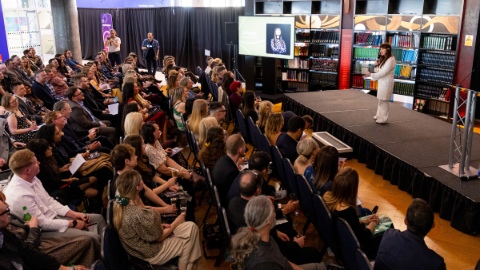
Having the freedom to do things a little differently extended to the format itself. Rather than a traditional dinner, we opted for an informal and more accessible post-work drinks and canapés reception. Early feedback suggests this resonated well, creating an atmosphere that felt inclusive and enjoyable, without losing the significance of the occasion.
From a financial perspective, delivering a surplus in year one was a strong outcome, particularly given the level of investment required to establish a new awards programme. Importantly, that surplus is reinvested back into CIPR Midlands activity, enabling us to expand our reach, collaborate more effectively with other groups, and enhance the quality of what we offer.
Best practice PR
But the real success lies in the recognition of the exceptional work being delivered across our region. It has helped showcase best practice and to create a visible benchmark for quality, creativity and ethical communication. This encourages higher standards, aspiration and will strengthen our professional community by bringing people together in a meaningful way.
Any initiative of this scale doesn’t end with delivery. Review and evaluation will complete the cycle, allowing us to reflect on what worked, where we can improve, and how we continue to evolve. That learning will shape future iterations, ensuring the awards remain relevant, sustainable and impactful.
We have already flagged our intention to stage the awards again in 2027. There is a desire to maintain momentum and to build on what has been created and continue to grow.
This was a collective effort full of shared passion. As chair of CIPR Midlands I am so proud of all those who gave their time, energy and expertise to make it happen. This first year has shown us what can be achieved when people come together with a shared sense of purpose to create something that is not only new, but genuinely meaningful.

Alison Gallagher-Hughes is the chair of CIPR Midlands. She is also a chartered PR practitioner and founder of Tillymint PR.
Read more from this author
Due diligence isn’t distrust, it’s professionalism
Has the PR industry failed to execute its own PR effectively enough?
Lessons from my first six months as a CIPR regional co-chair
The art of Persuasion: Jane Austen’s timeless lessons for modern PRs