

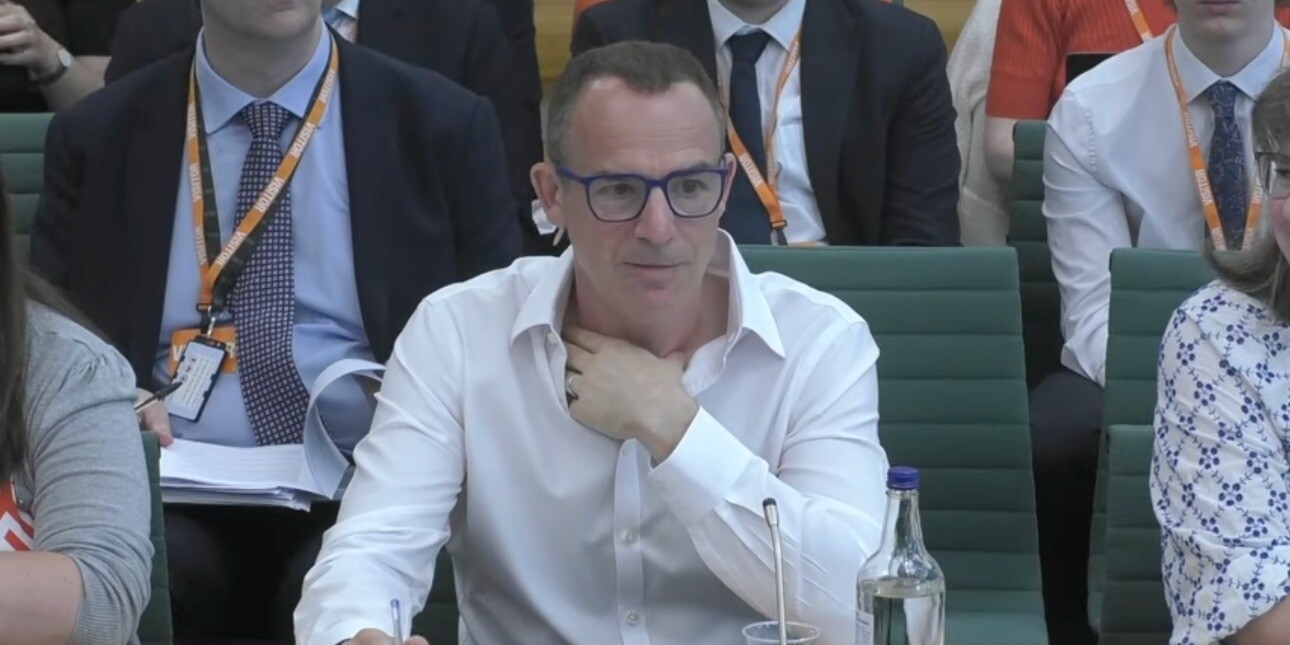
Was Martin Lewis right to criticise 'crap' communications?
Answering questions from the public accounts committee, the Money Saving Expert criticised the water industry’s use of jargon in its consumer comms. The MPs scrutinising admitted they didn't know what “equivalised income” meant either.
Communications got the blame last week. Nothing new about that. How many PR disasters have we seen that are not actually a "PR" disaster, but an operational disaster that's generated a lot of bad publicity? Too many to count, right?
No, the finger pointing has come from a very different direction, and from someone who not only communicates exceptionally well, but who has a professional communications background: Martin Lewis, the UK’s Money Saving Expert.
In his delivery of evidence to the House of Commons public accounts committee on utilities on 29 June, he called out the problem fair and square: crap communications.
And it is crap communications he'd like the regulators to crack down on.
The man makes a good point.
What even is "equivalised income?" Lewis questioned.
It's a macro-economic term, firstly. Mainly used by economists and statisticians. So not something the average person on the street would understand. In fact, no one in the room at the public accounts committee knew what it was either. He asked.
Then the former Brunswick comms professional made a second point: If none of those in this room knows that that means then it's probably not a good way to communicate it to vulnerable people.
Their audience.
The audience matters most when you are communicating. Because if they don't understand, then communication hasn't really happened at all.
Conspiracy communications?
Martin Lewis has been incredibly generous in his position that the poor phrasing is just "crap" communications, and not some sort of conspiracy from a corporate entity.
Here's where I disagree with Martin. The communication is crap, on that we are aligned. It's unclear, it's confusing and it's unhelpful.
But, unlike Martin, I do believe that these communications are intentional and I don’t think that makes me a conspiracy theorist.
You don't happen upon a term like "equivalised income" accidentally. It's not a typo. It's something very, very specific, and calculated.
In my experience professional communicators are very precise. We use words carefully. If we've liberally used the word "equivalised" you can bet we've read the OECD's definition and worked out precisely what it meant before publishing it.
To paraphrase Dr Seuss: They meant what they said, and they said what they meant.
But is the allegation of crap communications warranted? I think not. I'd hazard a (probably accurate) guess that this positioning hasn't come from a comms professional, who wants to ensure clarity, but a directive from someone or something higher up the chain.
A quick internet search reveals who that might be: Water UK, a trade association for the water companies. Here's a link to their consultation, commissioned by the water companies, to help the water companies position their solution.
In it they specifically note that “Equivalisation has been a contentious issue in measuring poverty in other sectors – eg for fuel poverty – and so the water industry should be cautious in being too definitive on this issue without further consideration.”
So what are they doing six years further down the line? Using that very phrase in their communications.
The intention is almost certainly to obfuscate.
A word like "equivalised" does something very useful if you're the one being held to account: it moves the argument for eligibility for support into a room for which only you have the key. Household income is something everyone can work out, equivalised income requires access to data that average households cannot access, or may not be able to use properly. It also shuts down any appeal to the outcome because if you don’t have the knowledge to argue your case, then you can’t.
Nobody in that committee room could challenge a number they couldn't understand. That's not a communications failure, that's a communications strategy. And it is working for the utilities companies.
The concern for PR pros
This innocent exchange in the House of Commons should worry every comms professional reading this, not just those who work in the water industry.
We like to think of our job as building understanding and managing reputations. But the same skill set that builds understanding can just as easily be pointed the other way, to build confusion that looks accidental.
Jargon isn't neutral. Complexity isn't neutral. When you know your audience won't follow a term, and you use it anyway, you've made a choice about who gets to understand and who doesn't.
Good communications should serve both parties in the exchange well. Crap communications, the deliberate kind, serves whoever's paying for those words, and hopes the audience never notices the difference.
Should regulators should crack down on it? Yes, absolutely, but the reckoning shouldn't stop there. The PR industry sets its own high standards, but those standards let a phrase like "equivalised income" become an acceptable phrase amongst organisations many of whom have also (voluntarily) committed themselves as corporate members of the Plain English Campaign, until it reached a Parliamentary committee unchallenged.
If professional communicators want to be trusted the next time we say something is "just" a communications problem, we need to stop giving cover to the people using confusion as a strategy.
Martin Lewis called it crap communications. I'd call it a strategy that worked perfectly, until someone in the room finally asked what the words actually meant, and why they were even being used in the first instance.
Tricia Fox is a Chartered PR practitioner, founder of Cunningly Good Group and author of How to Survive in Business on Substack.
Further reading
South East Water's reasons for not speaking to the media aren't good enough
Channel 4’s Dirty Business raises issues of ethics for PR pros