

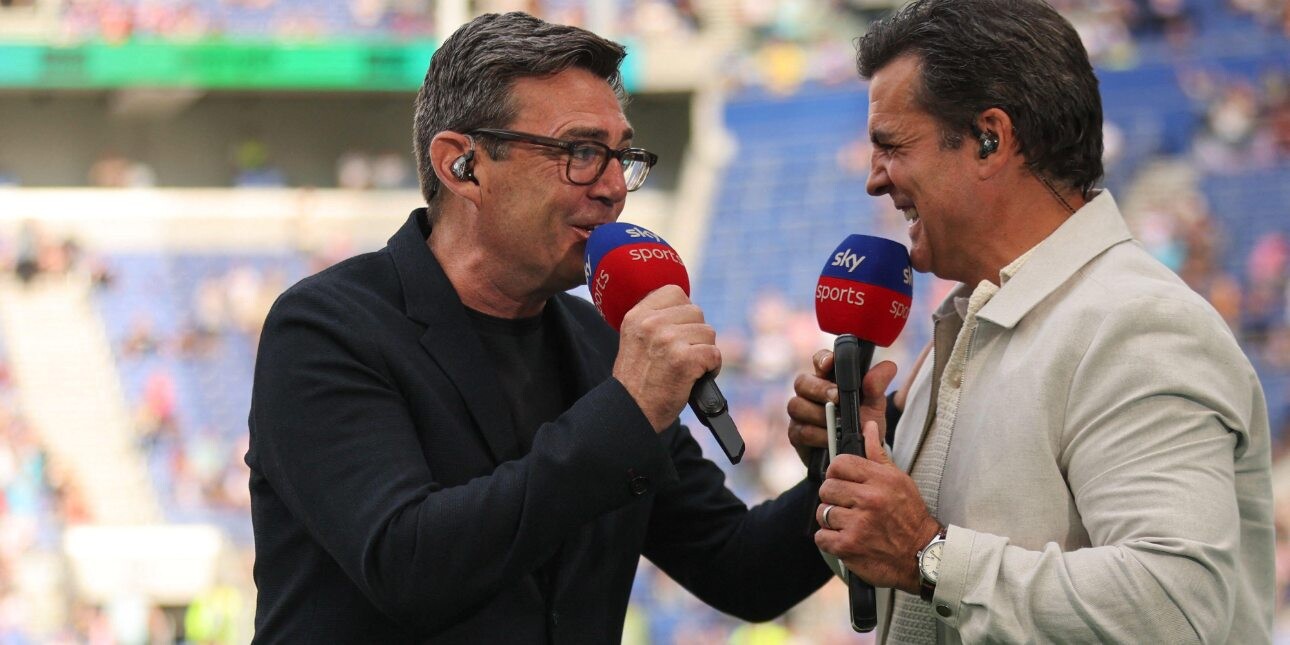
How will Andy Burnham’s personal communication style shape his premiership?
Britain’s next prime minister has been touted as an ordinary person who can connect to ordinary people, with an optimism that contrasts with Keir Starmer’s more staid approach.
I met Andy Burnham nearly 20 years ago on a train to London from the north. I was working in public affairs for a FTSE 100 company and, together with a colleague, we spotted what looked like a rare opportunity to raise some pressing corporate issues: the Chief Secretary to the Treasury, ministerial red box in hand, sitting a few rows away.
We were mindful of how busy he must have been but decided to introduce ourselves. What struck me wasn’t the fact he gave us his time but that we ended the conversation, not him. He was personable and entirely unhurried. It was a small moment but it perhaps revealed something important about his instinctive communication style: he engages even when he doesn’t need to.
That instinct has shaped his political identity. Those who have worked with him describe a leader who is approachable and good humoured but also capable of a sharp rebuke when delivery is threatened. One source in Greater Manchester recalls a stern message passed down from Burnham when the trams failed. Whether he delivered it personally or through his team, the point was clear: he expects systems to work for the people they serve. This blend of warmth and steel is central to how he communicates and how he leads.
Burnham the ordinary person
Burnham’s ability to campaign as an ordinary person with ordinary people has long been one of his strengths and demonstrated well in the recent Makerfield by-election. He is comfortable outside the Westminster bubble and speaks in a way that reflects that. His language is rooted in experience, not political abstraction. He has a knack for tapping into public frustration at how long things take to be delivered in Britain. Those around him often cite the slow pace of major national processes as the kind of delay that grates with his instinctive desire to get things done. That drive to make things better for people appears not to be a slogan but a thread running through his career and a defining part of his communications style.
Devolution is the central theme of his political project. His years as mayor of Greater Manchester have given him a platform to argue for more power outside London and to demonstrate what can be achieved when local leaders have the tools to act. But his record also shows the limits of communication when policy runs ahead of public consent. As a former constituent of his, I especially remember the recent social media backlash over the proposed congestion charge which forced a halt to the rollout because of public opposition. Critics argued the clean air zone was poorly communicated and lacked a funding plan. These examples show how control of the narrative can falter when the policy detail is not fully aligned or when the public feels unheard. The question now is whether he has learned from those experiences as he prepares for national leadership?
King of the North
Burnham and his advisers have been adept at shaping the narrative around him. He has cultivated a recognisable personal brand, from the ‘King of the North’ imagery to his informal trademark glasses, blue T‑shirt and jacket. It resonates strongly in some parts of the country though a number of Labour MPs in the south reportedly remain sceptical. He surrounds himself with able and loyal people, including a senior public affairs adviser who has supported him for some two decades and is tipped to join Burnham in Downing Street. Yet he has also drawn criticism, notably for not taking media questions at his Greater Manchester ‘manifesto’ launch though others argue it was a way of keeping the narrative tight at a crucial point in his transition to national leadership. And then there is “Manchesterism,” a term that may yet find its way into the dictionary, capturing his belief in place‑based politics but also risking sounding parochial if not carefully handled.
Optimistic Burnham v staid Starmer
His tone is upbeat and optimistic, in contrast to Keir Starmer’s more staid style. The country is looking for someone who can give a positive vision for the nation. He uses social media sparingly but effectively, from Reddit “ask me anything” sessions to short reels that feel conversational rather than contrived. He understands that communication cannot be separated from politics or policy; it is woven through both. The way he communicates will shape how he governs, particularly when he must balance regional identity with national responsibility.
Communications can set a mood, build trust, and create momentum. But sustaining it requires leadership: a clear, uplifting narrative that can carry the country through its current trials. That will be harder than ever in a world where events refuse to stay in neat domestic boxes. The renewal of the US conflict with Iran, the wider instability in the Middle East, and other international crises will inevitably intrude on his agenda and pull him away from the issues he most wants to talk about. Chief amongst his challenges will be the mercurial Trump for which Burnham will require all his wit and charm, as well as excellent advisers, to navigate comparatively unscathed.
Constraints will bite, delivery will slow, and the tide will turn at some point. How Burnham communicates then – when the bounce fades, when the message is no longer his to shape, and when he must balance regional identity with national responsibility – will matter most. It is in those moments that his instinctive, people‑first communication style will be tested, and where we will see how much it truly shapes his premiership.
.jpg)
Peter Osborne is a former journalist with more than three decades of experience in corporate communications and public affairs, working at the sharp end of contested and high-risk decisions, often involving the delivery of major infrastructure projects in the nuclear and water sectors – where public scrutiny, legal challenge and issues of trust are constant features. He has also worked in the public sector, including the police and probation services, as well as for third-sector organisations. Peter is also a board director for Aphasia Support, a national charity which helps people and their carers navigate aphasia, a language disorder caused by damage to the brain - most often after a stroke – that affects a person’s ability to speak, understand speech, read, or write.