

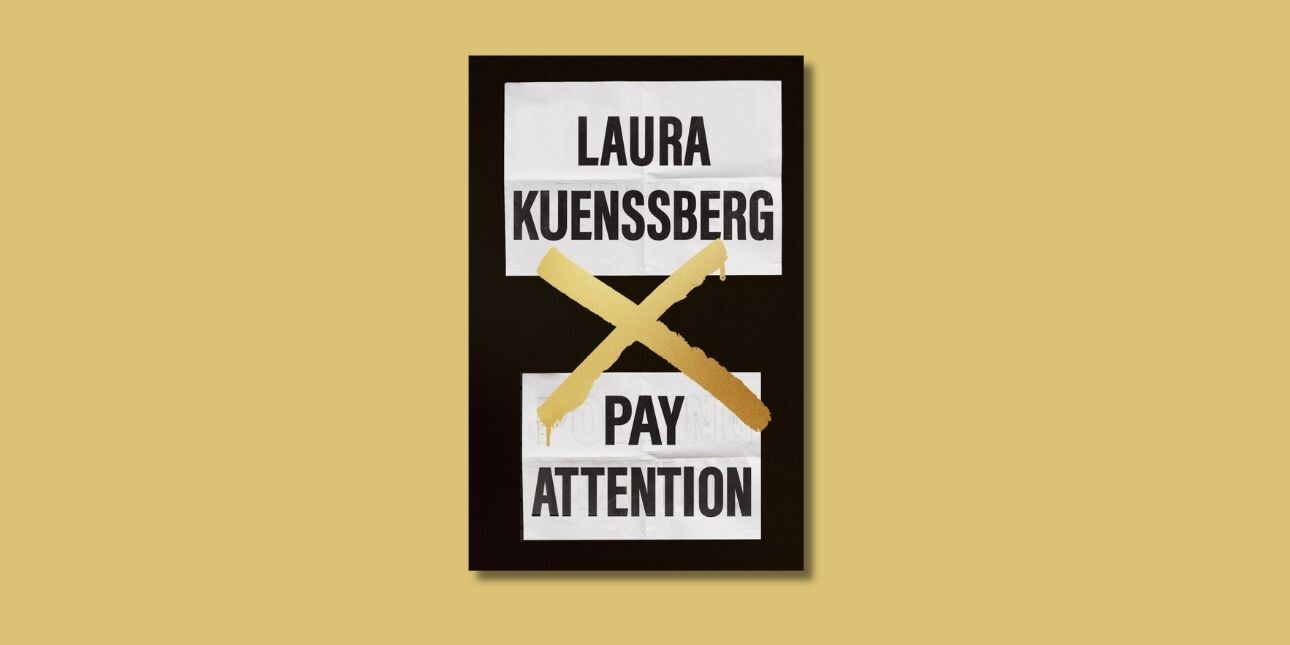
Pay Attention by Laura Kuenssberg book review – charting the transformation of British politics
Broadcaster Laura Kuenssberg’s assessment of British politics is a great read for all comms professionals.
Incredibly, there was time when British politics was actually considered a bit dull. Governments came and went, ministers occasionally resigned – and in 2009, everyone got terribly exercised about an MP’s expenses claim for his floating duck house. Those were the days, eh.
Today: Westminster resembles a surreal, toxic soap opera, peopled with, as I wrote in the Guardian in 2019 (in a tiny TV preview that nevertheless caused uproar in the Commons) “escapees from Pandora’s box… a wretched collection of dissemblers, idiots and narcissists.”
Now, drawing on over two decades of political reporting, including seven years as the BBC’s political editor, Laura Kuenssberg has waded in to try and make sense of the chaos. (Or as Gaby Hinsliff puts it in the Guardian, she’d kept “her cards close to her chest – until, apparently, something snapped.”)
In her new book, with the Jean Brodie-ish title, Pay Attention, she charts the transformation of British politics from the aforementioned snoozefest into its current, riveting hellscape, with political tribalism running riot, and the country’s collective blood pressure somewhere north of the national debt.
The financial crash, Brexit, social media and a revolving door of prime ministers all helped create a political landscape in which attention is currency, outrage is a business model, and all our certainties have been swept away; the only predictability – more unpredictability.
Anyone hoping Kuenssberg is about to reveal herself as a closet Tory (for example) will be frustrated. “I work for the BBC… I’d never express a view about which political tribe has got the right or the wrong ideas.” That must feel lonely, given BBC News’ transparent, shall we say, ‘over-corrective’ editorial against perceived left-liberal bias. But sure, okay. Safer, anyway, like the News Agents, to take pop-shots at populists, left and right, such as Zack Polanski or Nigel Farage – the latter, the political equivalent of a lingering fart, and as she says, “as much an outsider as I’m a giraffe.”
She’s good on the mechanics of modern political communication: how politicians increasingly tailor their pronouncements for social-media consumption, prioritising clip-worthy soundbites over anything resembling meaningful policy. Her advice to mainstream leaders: “Work out how to connect with [the public]”. Well, they surely think they have worked it out: through clip-worthy soundbites.
And for PRs, there’s plenty to chew over here: the tension between getting a message noticed and getting it believed, and the dangers of mistaking visibility for influence. Message discipline is one thing; having something worth saying is another.
Her argument that most people “quite rightly, do not want to think about politics all the time, and simply want to get on with their lives” is also a bit naïve. Post-Brexit especially, UK politics has become a completely unavoidable part of our cultural identity. Just two percent of people had an opinion about EU membership prior to 2016; a decade on, 60 percent of Britons think of themselves firmly as Leavers or Remainers.
In her defence, as the recent US midterms ‘Bluenami’ suggested, you can pour as much delicious culture war Kool Aid down voters’ throats as you like – but what people ultimately care about is not losing their home.
This is an earnest book – a “muted but heartfelt howl of frustration” as Hinsliff puts it, rather than some gossipy Westminster memoir. Although (probably at the publisher’s urging), the occasional titbit does poke through… such as the suggestion that an unnamed politician and his wife once attempted to recruit Kuenssberg for a threesome. You’ll surely have your own ideas about their identity; she couldn’t possibly comment.
Pay Attention is published by Corsair.