

Reaching men with health messages: Five tips for effective communication
To mark International Men's Day, a health communications professional working in the NHS explains how to create PR campaigns that reach and resonate with men.
Each International Men’s Day reminds us that men’s health remains a communications challenge. Despite progress in awareness and access, men are still less likely than women to seek help early, attend check-ups, or engage with preventive health campaigns. This isn’t about indifference, it’s about relevance. Too often, the language, setting and tone of our messages fail to meet men where they are.
According to the Health Survey for England (2022), around 67% of men are overweight or obese compared with 61% of women, and men continue to die almost four years younger on average than women (Local Government Association, 2023). Men are also three times more likely to die by suicide (Bupa, 2024) and are less likely to engage with NHS health checks, with only 37% of eligible men ever reporting an invitation to attend (Healthwatch England, 2025).
These figures show why as health communicators, we have the power to change that and have a vital role to play in reframing health messaging for men, making it accessible, relatable and relevant to real lives.
Here are five ways to reach and resonate with men, drawn from my work in health communications across Essex.
1. Start with insight, not assumptions
Men are not one homogenous audience. Campaigns built on stereotypes of masculinity risk alienating the very people they’re trying to reach. Use behavioural insight and local data to understand your audience: whether that’s men balancing work and family, those living with long-term conditions, or men who rarely access services. Knowing why they might not engage is the first step in creating messages that feel relevant, not preachy.
2. Keep it clear, practical and real!
Health communication often falls into the trap of being overly medical or technical, full of acronyms, statistics and clinical terms that simply don’t connect. For many men, that language can feel alienating or even intimidating. To cut through, messages need to sound like something you’d say in conversation, not in a consultation room.
We found that using humour, plain language and a bit of personality makes a huge difference. In our local men’s health work, we deliberately avoided the sterile tone typical of public health messaging. Instead, we adopted a more conversational style. For example, the “Know your nuts” campaign for testicular awareness. It used a simple, cheeky line to spark attention and normalise a topic that many men find uncomfortable to discuss. It made people smile, but it also made them think and crucially, act.
This approach worked because it was authentic. It spoke in the language of everyday life, not health jargon. The tone was approachable and down to earth, using humour to disarm embarrassment rather than to make light of the issue. Campaign assets were short, visual and mobile-friendly, focusing on quick prompts rather than long explanations.
We also prioritised clarity and action. Every message led to something practical: a clear next step, a website to visit, or a simple behavioural cue like “check once a month” or “book your blood pressure check today”. Men tend to prefer directness and logic - tell me what I need to do, and why it matters.
Keeping it real also means reflecting real life. Where possible, you can use imagery that features genuine local men rather than stock models; language mirrored how people actually talk; and a tone that recognises men want to stay healthy for the things that matter to them - their families, work, hobbies and mates.
By aligning messaging with their motivations, not assumptions, you make health feel relevant and achievable rather than clinical or complicated.
Ultimately, simplicity isn’t dumbing down, it’s cutting through. When communications sound like people, not posters, they start to change behaviour.
3. Use trusted messengers and relatable stories
Men often listen to people who look and sound like them – friends, sports coaches, barbers, colleagues. Use those trusted voices. Share honest stories from men who’ve faced health scares or made positive changes. Peer-to-peer storytelling humanises complex health messages and makes “talking about it” part of everyday life.
4. Meet men where they are
Health communication doesn’t have to happen in clinics. Take the message to the football pitch, the cricket ground or the comedy club. Here in Essex, our local Healthwatch, identified the need to create informal spaces where men could talk about their health and wellbeing. From that, the Fella’s Fair was born - a series of events that bring health services to places men already feel comfortable.
Healthwatch Essex has hosted Fella’s Fairs at football matches, family fun days and local events across Essex. The model is simple: start a conversation in an environment that feels familiar, and the barriers to engagement melt away.
5. Normalise the conversation
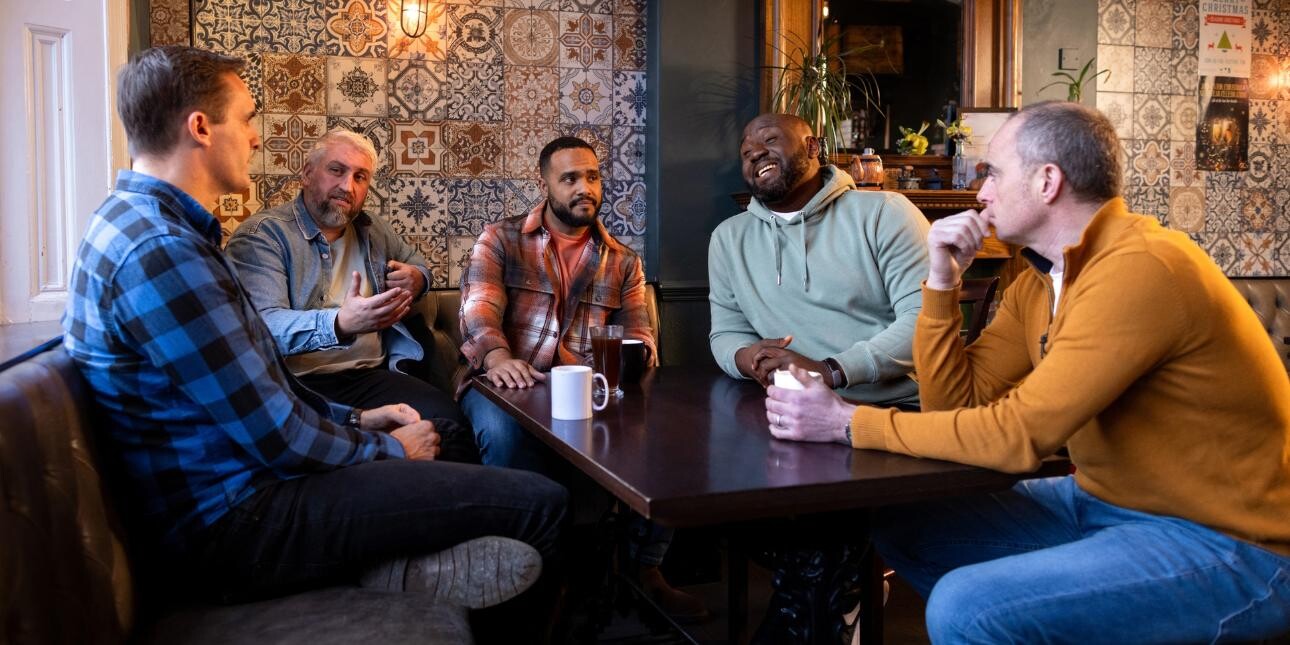
Breaking down stigma starts with making conversations about men’s health feel normal - something that can happen over a pint, during a match, or on the sofa with friends.
In one of our NHS campaigns, later featured by BBC News, we deliberately moved away from the stock imagery so often used in mental health communications depicting men sitting alone, looking downcast, or with their heads in their hands. While those visuals are well-intentioned, they can unintentionally reinforce stereotypes of isolation and despair.
Instead, we chose to show men of all ages doing ordinary things - playing computer games with their mates, watching football, or chatting at a barbecue. These images reflected normality, friendship and connection, reminding audiences that mental health touches everyone, not just those in crisis. By portraying men as active and engaged, we aimed to make the message relatable and to position talking about health as something every day, not exceptional.
We also rethought our approach to outreach. Traditionally, public health campaigns relied on posters and leaflets in surgeries or community venues, expecting people to come to us. But that model doesn’t always work, particularly for men, who are statistically less likely to engage proactively with health services.
So, we flipped the model and went to them. Using Facebook and other social media channels, we ran targeted adverts that appeared in the spaces men already inhabit online be that during their downtime, in their newsfeeds, and among content that felt familiar. This approach ensured the message was seen, not searched for. The adverts linked to short, accessible videos and local support options, creating a clear pathway from awareness to action.
The campaign’s success came from blending insight with empathy: speaking plainly, using authentic imagery, showing men in real life situations, and placing our content where they actually spend time. Looking after your health - physical or mental - was reframed not as a chore, but as a smart, self-aware act.
When health communication looks like real life and appears in the right places, it stops being a message and starts being a conversation.
Men’s health communication isn’t about reinventing the message. It’s about rethinking how, where and who delivers it. By keeping it real, local and grounded in insight, we can help more men feel seen, supported and empowered to take charge of their health.

James Sharp is a chartered PR professional and senior communications manager for NHS Mid and South Essex. He is also co-chair of CIPR East Anglia and one of the institute’s EDI champions.
Further reading
The 50something man has a PR problem
Ageing isn’t a problem for PR to solve, it’s a story to tell better
The award-winning PR campaign helping GPs better serve veterans