

What South Africa’s xenophobic attacks teach communicators about context
Images from local crises can quickly be repurposed to support political narratives elsewhere. Communications professionals have a role in making sure context is not lost.
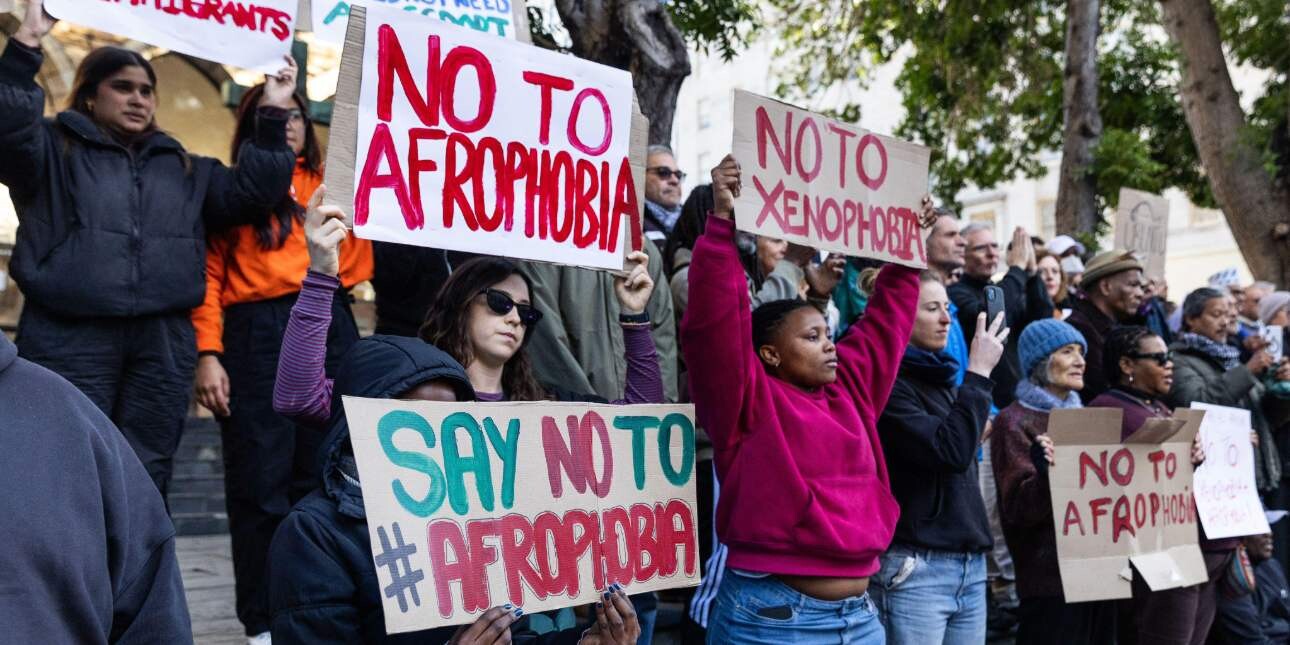
Recent outbreaks of xenophobic violence in South Africa have once again made international headlines. Alongside the violence itself, another problem is emerging: images from these incidents are travelling beyond South Africa and being used to support anti-migrant narratives elsewhere.
These are not isolated incidents. South Africa has experienced recurring episodes of xenophobic violence over many years. As an African, I believe it’s important to confront this reality, because migrant lives, African and otherwise, deserve protection from both physical harm and narrative exploitation.
When images travel faster than context
A video of a migrant being attacked or chased from their workplace can quickly be shared online, stripped of its local circumstances and reframed to support political arguments elsewhere.
The implications extend far beyond South Africa. Migration has become one of the defining political issues across Europe, where around 64 million people were born outside the country in which they now live. Although African migrants represent only a small proportion of that population, debates around migration are often driven by symbolism rather than statistics.
During the June 2023 unrest in France following the killing of 17-year-old Nahel Merzouk, images of disorder circulated internationally and became part of wider debates around immigration and social cohesion. After the 2024 Southport attacks in the UK, misleading and selective narratives spread rapidly around migration and public safety across Europe. For those seeking to reinforce hard-line positions on immigration, complete context is rarely necessary. A powerful image is often enough. The same risk exists with footage from South Africa.
When footage of Nigerian, Malawian or Ghanaian migrants are shown being attacked or accused of “taking jobs,” it can be detached from its local circumstances and reframed elsewhere. The emergency evacuation of citizens by the Nigerian and Ghanaian governments, while entirely justified, also increased international attention on the crisis.
The implied argument becomes simple: if Africans are telling fellow Africans to go home, why should other countries behave differently? This is an effective distortion and, politically, a powerful narrative resource. Exclusionary movements don’t necessarily rely on facts, but on emotionally charged images and selective storytelling.
The realities behind the violence, the unemployment challenges, institutional pressures, inequality, the long shadow of apartheid and broader social frustrations are quickly forgotten. Instead, a complex story is reduced to a single image that is repurposed to reinforce existing political positions.
South Africa is not unique. Today’s contemporary communications highlight that local crises no longer remain local. Images can be shared around the world in minutes and often stripped from their original context and used to support different political arguments. Once an image loses its context, it can be made to tell almost any story
What can communicators do?
First, communications should be seen as a safeguarding function as well as a reputational one. Migrants, refugees and other marginalised communities are often the first to experience the consequences when misleading narratives take hold. That means monitoring online conversations, flagging misleading uses of imagery early and providing clear context before misinformation becomes established.
Second, communicators should resist treating viral footage as self-explanatory. Visual content is emotionally powerful but rarely complete. Wherever possible, visual content should be accompanied by verified information about where events took place, when they happened, and the wider circumstances surrounding them.
Lastly, practitioners and organisations should think about narrative risk assessments before crisis unfolds. They should consider how images and messages could be repurposed by others to support political or ideological agendas beyond their control.
Context must travel too
Recent debates around immigration in the UK demonstrate how narratives around migration can shape public opinion and influence political positioning. Once those narratives are put into the ether, they are difficult to change, regardless of the facts.
In the digital world, images rarely speak for themselves, and that's why one of the most important jobs communications professionals have is making sure that context travels with the story.

Carl Kwaku Asiedu is a communications specialist at the Leeds Community Healthcare NHS Trust and founder of Fulda Hauz Communications, a strategic communications consultancy. He is passionate about supporting international graduates and helping organisations communicate more effectively.
Further reading
Rooted in nature: can regenerative leadership transform PR agencies?
What 120 applications taught me as an international graduate in PR
As trust declines earned media becomes PR's most valuable asset