

PR is struggling with being caught between greenwashing and greenhushing
Why proper training helps comms professionals see that their role isn't to make ESG sound good; it’s to make sure what's being said can survive scrutiny
CIPR trainer Gihan Hyde is an award-winning communication specialist who designed all the CIPR's environmental, social and governance (ESG) courses. The founder of CommUnique, an ESG strategy and communications advisory firm, Hyde has spent more than 25 years helping organisations including BP, HSBC and Barclays turn ESG and governance from “box-ticking into capability”.
She is also the chief executive of the Saafah Foundation, Saudi Arabia’s first and oldest corporate governance enablement and advisory social enterprise, and she also designed the Saudi stock exchange’s ESG certificate.
In this interview, Hyde explains why PR is struggling with being caught between greenwashing and greenhushing, the career advice that she wishes she received sooner, and what to expect when you sign up to one of her upcoming virtual CIPR training courses on ESG reporting and ESG governance for comms leaders (details and dates below).
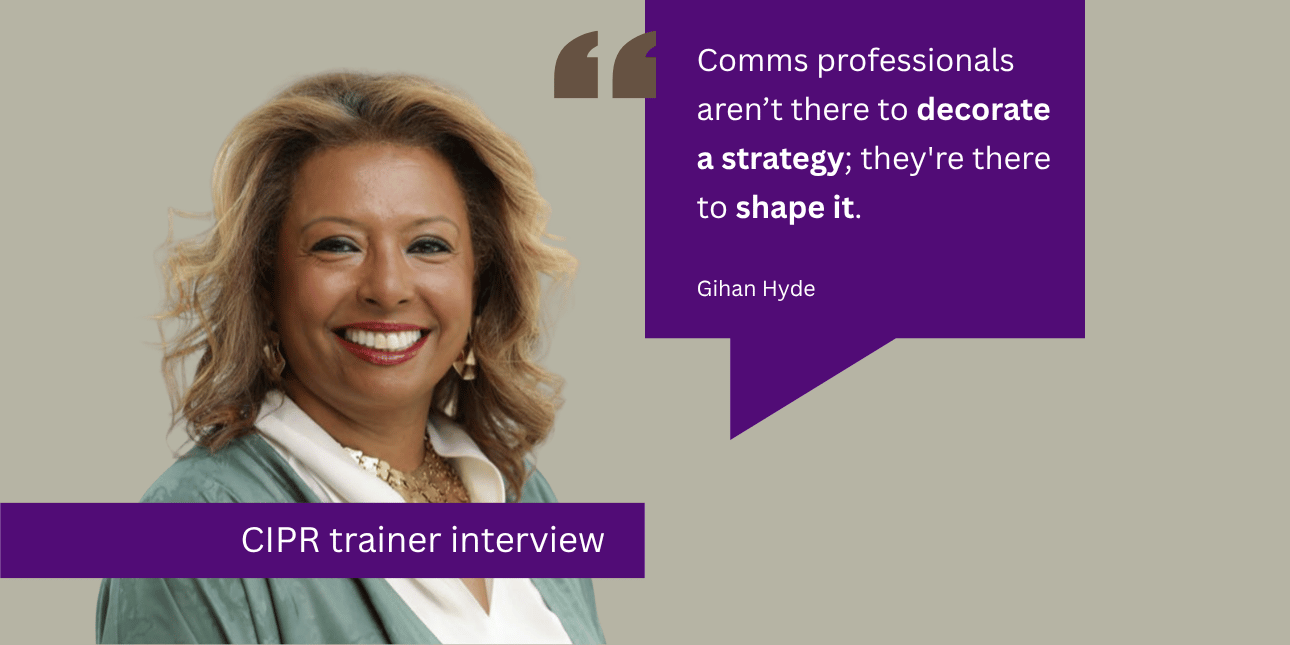
As a trainer, I love witnessing the moment it clicks - when a comms professional realises they're not there to decorate a strategy, they're there to shape it. Watching someone walk out of a session ready to challenge their board, not just brief them, never gets old.
Comms people ask the best questions because they sit closest to the gap between what an organisation says and what it actually does. That's exactly where ESG succeeds or fails. Training people who already have that instinct and giving them the governance and disclosure grounding to back it up is genuinely energising.
PR professionals are struggling with being caught between greenwashing and greenhushing. Legal says say less, leadership says say more, and comms is stuck in the middle without access to the underlying evidence. The real frustration isn't the messaging, it's being handed conclusions instead of reasoning, and then being expected to defend them publicly.
I see three trends in this area of work. Disclosure is shifting from voluntary to mandatory; ISSB [International Sustainability Standards Board] and its equivalents are changing what "we're committed to sustainability" is allowed to mean. The political backlash means the language of ESG is changing even where the substance is growing. And AI is quietly becoming a reputational risk of its own – including professionals feeding confidential material into public tools without realising it.
ESG isn’t a communication exercise; it's a governance discipline that happens to live or die in public. You cannot message your way out of a substance problem. The comms role isn't to make ESG sound good; it's to make sure what's being said can survive scrutiny.
The single shift in mindset that makes the biggest difference for delegates on my courses is moving from "how do we say this?" to "why is this true?" Once delegates start demanding the evidence and reasoning behind a claim, not just the approved wording, everything changes. Their advice gets sharper, their seat at the table gets bigger, and their organisation gets safer.
I wish someone earlier in my career had told me to say the sharp line first and qualify after. Early on, I buried my best points under caveats because I thought that's what professionalism looked like. It isn't. Senior people don't have bandwidth. Clarity is a form of respect, and it's also how you get remembered.
Sign up for one of Gihan Hyde's upcoming virtual training courses
ESG Reporting for Communications Leaders
Thursday 12 November
ESG Governance for Communications Leaders
Thursday 26 November
Further reading
The PR industry is changing fast. This is why you can't ignore regular training
'Great PR campaigns aren't all about the creative ... now you need data analysis skills'
How a CIPR trainer helps PR professionals tackle today's biggest communications challenges