


Why the PR industry should embrace those who 'think differently'
A group of neurodivergent public relations and comms practitioners explore how neurodivergence can unlock creativity, challenge sameness, and strengthen agencies in the age of AI
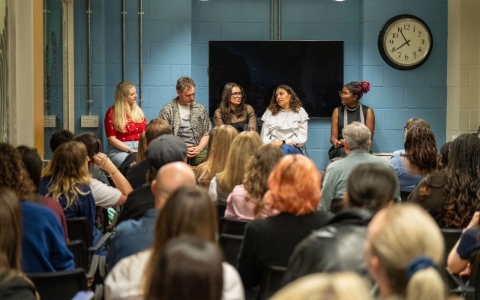
Last month, the neurodivergence group Nice ‘N’ Spicy Social Club held its first event. Four ‘neurospicy’ practitioners shared their experiences, discussed the potential of neurodivergent thinking, explored the challenges that accompany it, and offered insight into what employers can do to support their team members.
The speakers talked about the fact that the landscape is increasingly dominated by the automated and the algorithmic, leaving communications and marketing at a crossroads. Agencies are “retreating from difference at exactly the moment AI is making sameness systematised,” according to speaker Opal Turner, founder of Opaluke. Turner noted that the industry has a “team, brand and business need” to include neurodivergent and disabled voices.
For Ruby Quince, creative director at Burson, the value of a neurodivergent team is found in their contribution to original thinking in a world that risks becoming flattened. “We’re the extra mile, the excited face that emerges from the rabbit hole with an insight from the depths or a revelation that changes everything,” Quince said.
This ability to “stray into uncharted territory” allows neurodivergent team members to “return with discoveries” that a more linear thinker might overlook. “We’re the ‘hang on, how about…’ thought that nails the brief, those who ask the stupid questions that unlock things, the new perspective that adds depth.”
Detail-orientated thinking
But there is more than just creative flair; there is also a technical advantage for some neurodivergent people, Sophie Donne, senior account executive at Work & Class, argued. She highlighted how “detail-oriented thinking benefits media monitoring and proofreading releases, pitches and reports.” She argued that “strong pattern recognition and analytical thinking help autistic employees spot connections others may miss,” providing a sharper analysis of media trends.
This technical excellence is often underpinned by a profound sense of human connection, with Sabrina Coogan, associate director at Here Be Dragons, pointing to “empathy” as the defining contribution of a neurodivergent team. “Neurodivergent colleagues often have an overwhelming sense of hyper-empathy and a deep-seated commitment to fairness,” Coogan explained. This ensures that “work is viewed from different perspectives, that clients are truly cared for, and that the team is supported and protected.”
What came through from each of the speakers is that neurodivergence is far from a monolith and that the skills and capabilities of this community are individualised. It’s for smart employers to work with their teams to understand and unlock them.
Despite these attributes, the speakers pushed back against the popular narrative that neurodivergence is a simple ‘superpower’. For Turner, this framing is “a symptom of a deeper problem, of the inherent ableism in our industry and culture.” It often ignores the physical and mental reality of the individual: “Disability, of any kind, can be felt alone in a room. In your own body. In your own mind. That’s the part the superpower narrative skips over,” she said.
Quince agreed that the label is a “trigger that’s easy to miss because it’s positive.” He added: “To many of us, the term ‘superpower’ points to how people can cherry-pick the best bits but sweep the bad bits under the carpet. Celebrating the good and chastising the bad is a real problem, and it costs us dearly.”
The narrative is further complicated by systemic inequality. Coogan noted that the ‘superpower’ label is a “double-edged sword” whose value depends “entirely on the level of privilege an individual holds.” She pointed out: “Black and mixed-race children are significantly less likely to receive an early autism or ADHD diagnosis compared with their white peers,” meaning they aren’t always “afforded the ‘superpower’ trope.”
Support not platitudes
The “spiky profile” of neurodivergent employees – where they “excel in some areas and fall behind in others”, as Donne put it – requires specific, active support rather than platitudes, the speakers agreed. “Words don’t count if actions don’t back them,” said Quince. He urged employers to “listen to people’s experience and assess it without applying ‘typical’ logic to ‘atypical’ brains.”
For him, this means understanding that “perfectly sound, logical advice sometimes just doesn’t compute.” He added: “Things like ‘just do your timesheets each day’ or ‘just get a day planner and stick to it’ make sense, but we can’t always act on it, even if we agree – and we usually do, which is the most frustrating part.”
When it comes to diagnosis and asking for adjustments, Turner argued that the burden of disclosure shouldn’t rest on the employee. She suggested building “conditions in by default”, such as standard questions on “how people like to receive information, feedback and check-ins”. Coogan echoed this sentiment: “If an employee consistently receives feedback about a ‘lack of attention to detail’, it’s a sign that their environment – not their capability – is failing them.”
Ultimately, “inclusion isn’t charity, it’s a strategic advantage,” Turner argued. As the industry grapples with its future, the voices of those with, as Quince calls them, “wonky noggins”, may be the most vital.
“Creativity doesn’t happen solely inside people’s heads,” Turner concluded. “It is an interaction between the person and their environment, and if you build an environment that excludes certain kinds of minds, you’re not just failing those people. You’re failing the work.”
The advice for businesses was simple: “Stop assuming and start listening. Be open to alternative ways of thinking and working,” because, as Turner believes, “it’s the people we’ve overlooked the most that hold the answers we need the most.”
James Gordon-MacIntosh is co-founder of Nice ‘N’ Spicy Social Club with Don Ferguson and Flora Laven Morris. The trio are board directors at Hope & Glory.
Read more
PR with an ADHD brain: Why variety helps me thrive
Six practical ways to create a more neuroinclusive workplace
Neurodivergence: Nurturing the strengths of PR's hidden advantage (CIPR members can log one CPD point for reading this)
Essential reading
The PR campaign challenging the idea of missing people as entertainment (CIPR members can log one CPD point for reading this)
How we did it: Creating a regional PR awards programme with a sense of pride
Understanding digital PR from a puzzled marketing student’s perspective